Sunday, 31 January 2021

"We May Not Change The World In One Day" And A Tribute To The Volunteers And Private Donors Who Are Helping Victorias Flood Victims

It will be remembered as one devastating disaster and a bad wake-up call, not only to the people of Victorias, but also the people of the nearby municipality of E. B. Magalona, and cities of Talisay and Silay (in the province of Negros Occidental, Philippines).

The floods of January 1 and January 8, 2021 (read blog here), are now part of its history to add to the big floods of January 1907, 1922, and November 1995 (read blog here)😱

  (Evacuees at the Our Lady of Victory parish refectory)
                     (Donations from Bosconians)

From the stories I heard from the 1995 flood victims, they still remembered the height of the waters and the damage it caused to their homes compared with the floods of January 1 and January 8, 2021. 

They also recalled the distance the floodwaters travelled into their neighborhoods, the height the flood waters reached the walls of their homes, and where they had to evacuate then.

(Volunteers from Bacolod City brought help 
            and distributed snacks to the evacuees)                                       
        (Distribution of donated goods at Barangay 1)

Although these tragedies bring out the best in humanity, misfortunes like these have also become opportunities for politicians to exploit. They just know how to make use of other people's misery for their own political propaganda.😡  

They either pass other people's donations as their own, or even join the distribution relief goods as if they were the ones who actually organized it. Some go as far as wading or swimming in the flood waters for a good photo-op.😝

                (Pre-loved clothes are appreciated)
(A mother and child walk through a muddy path 
that used to be neck-deep in flood waters 
with the help kind donors gave.) 

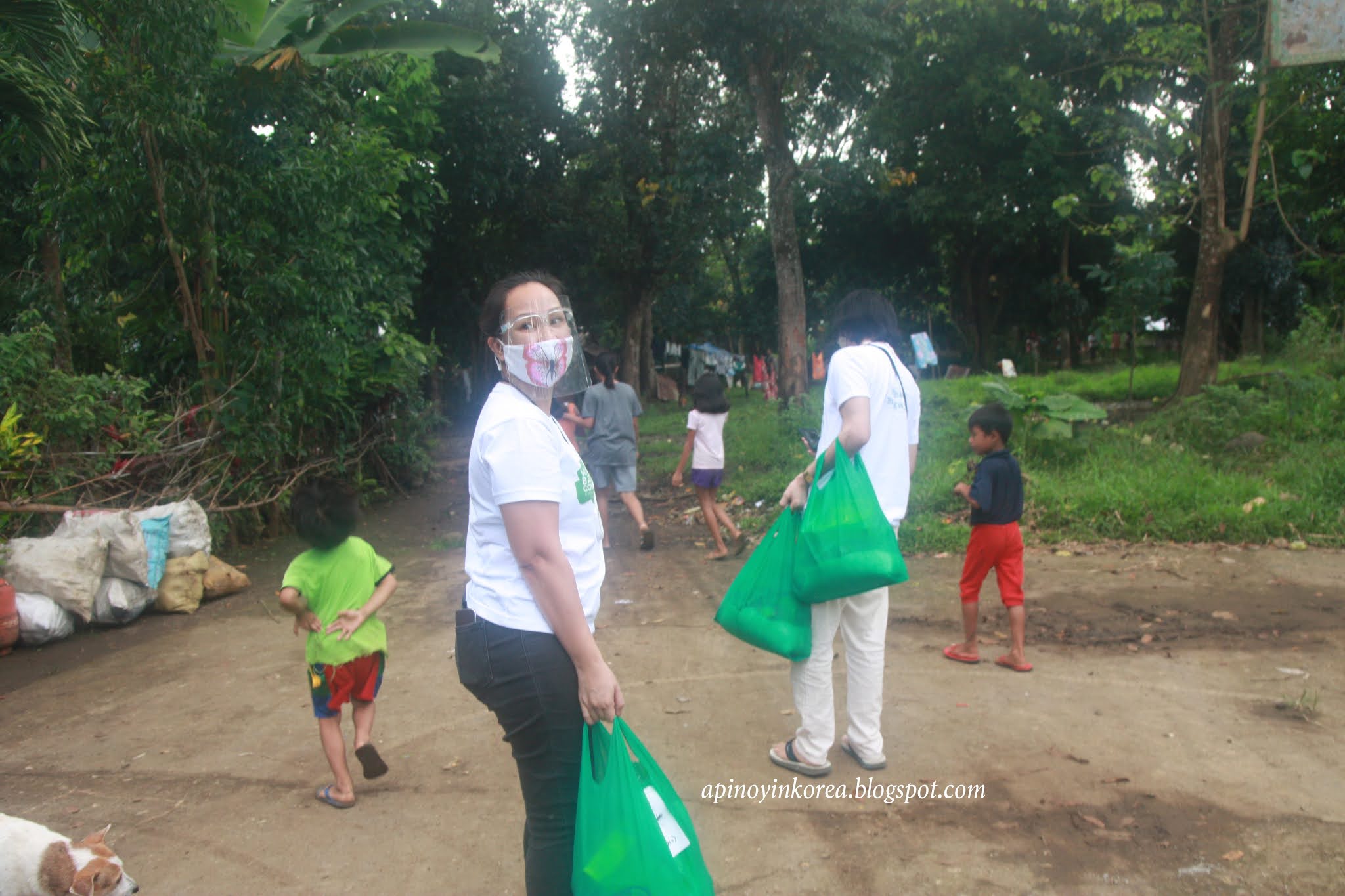
But for the kindhearted and sincere givers (of time, money, and goods), there is no need for them to write down their names on the packages or shout them out every time they bring their much-needed donations to the flooded neighborhoods.

For them, it is their responsibility to help. Period.😎

(Distributing donated goods at Sitio 
Litib-Litib of Barangay 3)
(Volunteers carry relief goods through 
the twice-flooded alleys)

This is why I pay tribute to the nameless individuals, volunteers, and families from Victorias, from other towns and cities of Negros island, from other provinces and countries, who have given their time, donated cash and goods, and even opened their homes, churches, and even garages to shelter and feed our fellow Victoriahanons.👪

(Youth volunteers deliver donations from the parishioners of Miranda, Pontevedra, and San Enrique)

        (Delivering donated goods to South Barrio)

But as these generous citizens are willing to help every time there is a tragedy, I'm wondering whether we are all just waiting for the next big flood and not acting to solve and minimize the impact on the way of life, livelihood and properties of these environmental disasters.

(Fr. Joriz Calsa, SDB of the Saint Joseph, the Worker parish receives donated rice at the Immaculate Conception Church at Canetown Subdivision)

I have always wondered whether our government simply relies on distributing relief goods every time this happens, and not actually having an action plan to solve the flooding?😠

What do you think?😭

(Distributing goods at Sitio Bugtong Lubi of Barangay 6)
            (Packing relief goods for distribution)


Taking a line from Michael Jackson's song, In Our Small Way (which aptly describes the generosity of the kind donors), "we may not change the world in one day" would probably also serve as a reminder that we have to change our ways in order to protect the environment and the future generations of this place.😄

In the meantime, let's pray the next flood won't happen any time soon.🙏

Saturday, 23 January 2021

Fireworks And Floods: How Victorias Welcomed 2021

(Dazed residents watching 
their flooded homes from dry land)

Just as Victorias City (of Negros Occidental in the Philippines) was welcoming the Year 2021 with fireworks at 10PM of December 31, the waters were slowly overflowing from the two rivers, Malihaw and Magnanudthat cut through some of the city's barangays. 

During the day, one could see from the city center that the nearby mountains, where tributaries to the rivers originated, were covered with dark clouds that signified heavy downpours. Their slopes were drenched the whole day and were not able to absorb all the precipitation.

(A pig tied to a pole) 

(A resident wades through waist-deep 
waters of Barangay 1)

So by the time the residents were out on the streets that night, me included, to watch the fireworks on new year's eve, the barangays (city districts) located next to the rivers already started to experience the effects of their swelling. 

Estelita, a senior citizen living at Toreno Heights Subdivision in Barangay 9, which sits next to a river, told me that around 9PM, waters already reached her gates. But past midnight, it was inside her house, and by early morning, Noneco, the power company turned off the electric supply in the city to prevent electrocution from live sockets in homes or from live wires dangling around.


Soon after midnight, people had to frantically evacuate and move to higher grounds. They had to take shelter at the city's coliseum, cultural center, commercial center, barangay halls, and other places where they could spend the night with their children, frail senior citizens, family members with disabilities, and pets.

Some families who raised hogs in their own backyard piggeries were not able to save them. The lucky ones were dragged out to higher areas and tied to poles. 

When daylight came, the whole city woke up to people and children sleeping on the pavements, crowded evacuation centers, and with many more sleepless and still in shock as to what happened to them on the first day of the year.


(The Magnanud River overflows)

(A statue of the Blessed Virgin quietly 
sits in the middle of a flooded area)

As if the Year 2020 was not bad enough, here they were, hours after welcoming 2021, away from home, dazed, worried and nowhere to go.

Luckily, by midmorning, on January 1, a Friday, the waters receded and most of them were able to go home.

But then, just after a week, on the night of January 8, 2021, also a Friday, the same factors came together to cause another flooding. This time, the waters were higher and came earlier in the evening.


(Victoriahanons watch the raging waters from Magnanud Bridge)

(A man paddles his boat through the flooded neighborhood in Bangga Daan area)

The evacuations happened immediately because the flooding was much higher and faster. It was like the new year's flood was just a drill on how to prepare for a bigger flood.

The barangay hall near our place was already filling up with evacuees by 10PM, and we even welcomed a family into our home. This was a time for us who were not affected to extend help to those who were.😊

Again, by daybreak, at flooded neighborhoods, most of the men in the family were on the streets watching their flooded homes from afar, while other members were at barangay halls, other evacuation centers and even at friends' homes.

(A sow catches some lost sleep next to a 
bus terminal in the Bangga Daan area)

(Unfortunate fruit vendors from out-of-town 
watch an inundated fruit and vegetable 
market from higher grounds)

On that first flood on new year's day, I got up early to buy some bread for the evacuees at our barangay hall. Unfortunately, there was no bakery open as workers went home for the holidays. We only had some coffee packs and bottled water to give.

On the second flood, however, as bakeries were already in operation, I was able to buy packs of pan de sal, the only ones left at the bakery stalls, to give out. I gave a couple of packs to the family taking shelter at the pavement outside a store and some to the evacuees.😎

(This area of the fruit and vegetable market 
should have been crowded with vendors 
and customers as it was a Saturday)

(The cemetery is all covered with murky 
waters from the Magnanud River)


As the waters were higher this time, the electric company restored power in the evening when most of the flooding had receded. 

The earliest recorded flooding in Victorias was on January 9, 1907, and another one in 1922 (read blog here). The one in recent memory was in November 1995, about 25 years ago.

With a lot of factors contributing to this disaster, I think we should all be preparing for another one. I heard people saying that cutting of trees at the mountains and rampant quarrying of river banks contributed to the flood.😡

I guess poor waste management and lack of city planning should also be added to that.😡

It's not a matter of 'if'. It's a matter of 'when' another flood will ruin the locals' livelihood and properties. 

The city government should discuss with the people its plans of action to address the issues on how to prepare for these disasters and to minimize the impact on their way of life.

These are some of the photos I took.😢

(My bag full of packs of pan de sal for the evacuees)


Thursday, 31 December 2020

The Victorias Barter Community: Sharing Kindness While Bartering Trash and Treasures

Bartering is exchanging goods (or services) without using money. Before gold and other items used as currencies, bartering was the mode of commerce between peoples.😊


But these days, as more online communities devoted to bartering have been created on Facebook, it has become the easiest way of surrendering old items and things you want to give away in exchange for things that you need. 

In other words, "one person's trash is another person's treasure". 😄 

But in this difficult year, everyone in our community has been affected by the pandemic and this Christmas season, many families will have less to celebrate about.

And in order to give these families a reason to smile about, the Victorias Barter Community, led by Ms. Nonalyn Librodo, chose 50 families, which were nominated by members, to receive Christmas packs that contain rice, Spam and other canned goods, coffee, bread and sandwich spread, and for those who have children, infant formula and diapers.


These goods were donated by some members of the Victorias Barter Community who simply wished to share.👪💓

To deliver the gifts, a team of volunteer members went to visit the beneficiary families living in barangays close to the city center. They also went to the areas of Florencia, Gaston, Cubay, Hda. Nenang, Aji, Villa Victoria and Hacienda Carugiat, that were far from the city center.


The volunteers did not care about how far or how difficult it was to deliver the Christmas packs. 

This was about sharing, caring, and looking after the members of our community who need help the most.


More than just a vehicle for exchanging or bartering, these online communities should be an instrument for members to share with our brothers and sisters who have less, not only during the Christmas season but all year round.😍

The photographs on this blog were taken during the visits to some of the beneficiary families of the Victorias Barter Community's Christmas 2020 sharing.😎


"We don't care about being tired or how far we need to go in order to bring happiness to our brothers and sisters." - Victorias Barter Community


Ang ila mga yuhum nagdala guid kalipay sa mga naghalatag.💝

Their smiles bring joy to those who shared.💖

Monday, 30 November 2020

The 1803 Frontliners: Dr. Francisco Javier de Balmis and The Royal Expedition to Eradicate Smallpox

Researching for another chapter for my Victorias History blog (read here) during this Covid-19 pandemic, I learned that, other than 1900s cholera epidemic, the contagious smallpox also swept the Philippines at the turn of the 18th century. 

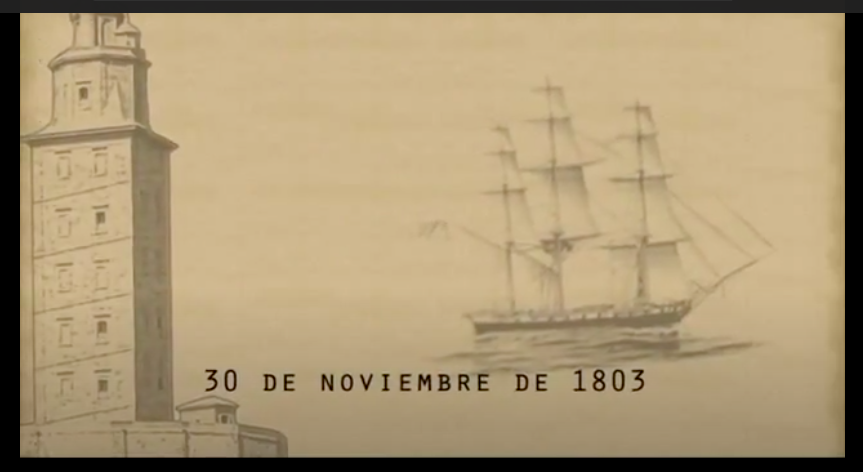
(A sketch of the famous Torre de Hercules of
 A Coruña in Spain and the ship, Maria Pita)

And after reading more about the smallpox epidemic, I decided to blog about it as a tribute to the people who helped stop the spread of the disease in the Philippines, saving more lives than anyone could have ever imagined. 

Although it was 217 years ago, I found a personal connection. The connection is the Spanish coastal city of A Coruña (click here), the city where the royal expedition sailed from on November 30, 1803. It is also the home of my good friend Kiko, who showed me around his hometown a few years back!😃

(The expedition's route from Spain to the 
Americas  to Las Filipinas and back to Spain 
that lasted from 1803 to 1806)

Royal expedition
The expedition was officially called Real Expedición Filantrópica de la Vacuna or the Royal Philanthropic Vaccine Expedition. 

It was a royal expedition as it was funded by King Charles IV, the king of Spain at that time, who ordered the vaccine to be shared among his colonies on the other parts of the world.

The smallpox vaccine, the world's first vaccine (and yes, 'Hecho en España'!), was discovered in 1796 by Dr. Edward Jenner of England. 

Dr. Jenner successfully created the vaccine from cowpox virus after he learned that milkmaids did not catch the smallpox because they were already exposed to cowpox, a disease in cows. That's why the word vaccine originated from the Latin word, 'vacca', which means 'cow'.

And while the smallpox vaccine was available in Europe, it was not available in the Spanish territories in the New World. That's why King Charles IV appointed his royal surgeon, Dr. Francisco Javier de Balmis, to spearhead the expedition that eventually brought the vaccine to the Canary Islands, Central America, South America, the Philippines, and China.
 

In order for the vaccine to be brought to the Americas, Dr. Balmis needed human hosts to carry it. That's why he brought 22 orphans from A Coruña along with a deputy surgeon (Dr. Jose Salvany), two assistants, two first-aid workers, three nurses, and Sra. Isabel Zendal Gomez, the directress of the orphanage (Casa de Expósitos) in A Coruña where the orphans came from. They sailed on a corvette named after the Galician heroine, Maria Pita.
Since the effectiveness of the vaccine was short-lived and they didn't have the technology, like refrigeration, to prolong the 'shelf-life' of the smallpox vaccine, Dr. Balmis needed the healthy orphans to carry the vaccine in their bodies during the long trip to the Americas. How? Every ten days, the live vaccine was transferred from one orphan's arm to another until they reached the New World. Monuments for these 22 Spanish orphans from Galicia were installed in A Coruña, Spain (click here for the video).

According to the list, the orphans aged from three to nine. So very young!😱 

These kids probably thought they were just going on a sea trip as they were too young to comprehend what momentous achievement in medical and human history they were going to be part of.😇


(The names and ages of the Spanish orphans

Las Filipinas
After a successful expedition in the New World, Dr. Balmis left Acapulco, Mexico on February 8, 1805, for Las Filipinas.

On April 15, 1805, Dr. Balmis with 26 orphans, who, this time, were all Mexicans, arrived in Manila. 

There was an initial reluctance from Filipinos against the idea of the vaccination, especially from the Catholic Church during that time. But after the Governor-General Rafael Aguilar made an example by having his five kids inoculated, everyone else accepted the cure. The Philippine expedition of Dr. Balmis inoculated about 20,000 Filipinos.

Sacrifice for humanity
The Balmis expedition did not end in Las Filipinas. 

Bringing with him three Filipino orphans, he sailed for China and eventually returned to Spain in 1806. (Sadly, I could not find records of the names of these Mexican and Filipino orphans, or which orphanages in Manila the Mexican orphans were later sheltered, or whether the Filipino orphans were brought to Spain or sent back to Manila😓).

As gratitude to King Charles IV, a monument was erected in his honor in 1824 at the Plaza Roma in Intramuros, Manila. 

The Balmis expedition has been hailed over the centuries as one colossal humanitarian effort that has no equal in world history. Millions of lives in several continents have been saved by the sacrifice of a few, including the very young orphans who sailed on boats across the high seas in order to save people they did not even know. 

              (Arriving in Manila on April 15, 1805)

And on setting foot on foreign lands, they brought more than just a cure for a disease. 

And in our time in this new pandemic, we all remember Dr. Balmis and his 'frontliners' of 1803-1806.😍 

And for us here in the Philippines, let's be grateful for those orphans' sacrifice for humanity because, two centuries ago, they saved the lives of Filipinos - a people from a world they did not even know.🙏

                              *  *  *  *  *


(That's me being dwarfed by 
the Torre de Hercules 
in A Coruña on a cloudy morning😎)

#vaccine #balmis #acoruna #spain #galicia #mariapita