Showing posts with label Spain. Show all posts

Wednesday, 10 April 2024

Concierto de Aranjuez and The Spanish Countryside

During sleepy afternoons in my office in Seoul, I always tried to always keep awake with a cup of iced cafe mocha that I would buy from a kiosk at the Sinyongsan Subway Station (in the Yongsan District) that was connected to the food arcade of our office building's basement.

During hot summer days, I didn't need to get out of a building to buy coffee. I would leave my jacket hanging on my duo-back chair (the chair is very good for those with bad back and scoliosis!), and just took the lift going to the ground floor and the escalator to the basement. 

On freezing winter days, I didn't need to wear my overcoat, just a jacket.

A few times during winter, the lady who took my order would ask me if I indeed ordered iced cafe mocha. She might have wondered why would somebody buy a cold drink when it was freezing outside. She obviously didn't know this customer that well.😄

But amidst the financial reports that I needed to work on, there was an FM radio station based in London that kept me company: Classic FM.

I would just put on my earphone that's connected my laptop and listened to the classical music of Classic FM.

Since classical music has no lyrics, the music did not interfere with what I was reading. The music kept me relaxed while the coffee kept me awake.

And a few times during the week, there was one piece of music that always distracted me. The music, mostly of classical guitar, led me to imagine the Spanish countryside as it played. The song? Concierto de Aranjuez


Concierto de Aranjuez was composed in 1939 by Joaquin Rodrigo, a Spanish composer. There was something in the music that led me to imagine I was exploring the Spanish countryside on a train. The slow tempo at the beginning plus the strums of the solo guitar and the notes of the flute all brought me to provincial Spain, and at times, I could even visualize in my mind flamenco dancers performing to the tune.  

So, when I was planning on my trip to Spain years ago, I made sure I rode the Renfe train (read blog here)

But when I was finally in Spain, and riding the train and sitting by the window, how come I didn't hear Aranjuez in my head? 😂


My trips to the countryside included rides to Alcala de Henares from Madrid (read blog here), Madrid to Santiago de Compostela (read blog here), Santiago de Compostela to A Coruña, Santiago to Barcelona, and Barcelona to Monserrat (read blog here). I guess Aranjuez would only be heard when I am actually tuned in to Classic FM!😊


I always told myself that riding the train was part of the tour, and as I was travelling alone, it was even an adventure! And the few times I got lost made the trip even more memorable! I wasn't afraid to get lost since I spoke basic Spanish, letting me chat with locals on the train, with fellow pilgrims at churches, and even with strangers from whom I asked directions one late night when I realized I was lost!😆


But before I left for home, I was happy that I was able to buy at El Corte Ingles CDs of Paco de Lucia, one of Spain's most famous classical guitarists, featuring his performance of Concierto de Aranjuez. This was recommended by my friend, Kiko Reimundez, with whom I reunited in his hometown, A Coruña. Kiko is a musician, too.

I have always said that things happen for a reason.

Classic FM introduced me to Concierto de Aranjuez, and the song gave me the dream of seeing the Spanish countryside from a train, which then gave me an idea to visit Spain.

I still have the CDs, the photos, and most important, the memories of the Spanish countryside. And of course, Classic FM still plays on my laptop.😎


                              * * * * *

If you want to listen to the hypnotizing music of Concierto de Aranjuez, do click the video below.😐


And if you want to also tune in to Classic FM, do click the link:

https://www.classicfm.com/

#Aranjuez #aranjuez #Spain #Renfe #ClassicFM #classicalmusic #music #tourist #travelblog #ConciertodeAranjuez

Monday, 30 November 2020

The 1803 Frontliners: Dr. Francisco Javier de Balmis and The Royal Expedition to Eradicate Smallpox

Researching for another chapter for my Victorias History blog (read here) during this Covid-19 pandemic, I learned that, other than 1900s cholera epidemic, the contagious smallpox also swept the Philippines at the turn of the 18th century. 

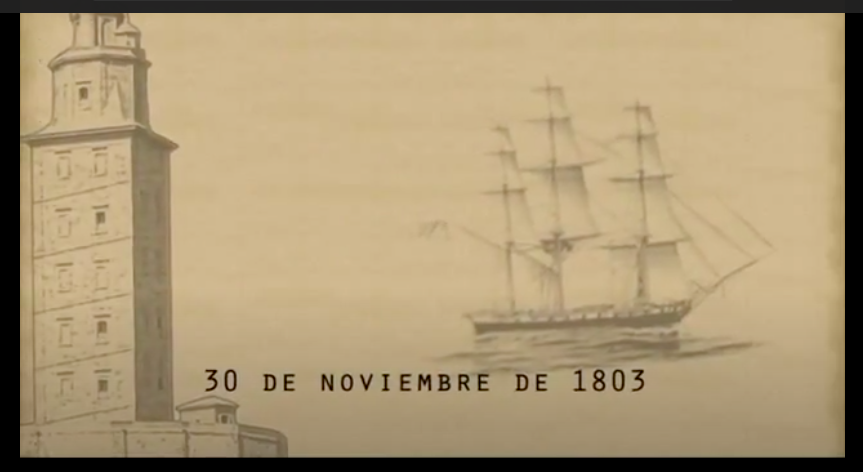
(A sketch of the famous Torre de Hercules of
 A Coruña in Spain and the ship, Maria Pita)

And after reading more about the smallpox epidemic, I decided to blog about it as a tribute to the people who helped stop the spread of the disease in the Philippines, saving more lives than anyone could have ever imagined. 

Although it was 217 years ago, I found a personal connection. The connection is the Spanish coastal city of A Coruña (click here), the city where the royal expedition sailed from on November 30, 1803. It is also the home of my good friend Kiko, who showed me around his hometown a few years back!😃

(The expedition's route from Spain to the 
Americas  to Las Filipinas and back to Spain 
that lasted from 1803 to 1806)

Royal expedition
The expedition was officially called Real Expedición Filantrópica de la Vacuna or the Royal Philanthropic Vaccine Expedition. 

It was a royal expedition as it was funded by King Charles IV, the king of Spain at that time, who ordered the vaccine to be shared among his colonies on the other parts of the world.

The smallpox vaccine, the world's first vaccine (and yes, 'Hecho en España'!), was discovered in 1796 by Dr. Edward Jenner of England. 

Dr. Jenner successfully created the vaccine from cowpox virus after he learned that milkmaids did not catch the smallpox because they were already exposed to cowpox, a disease in cows. That's why the word vaccine originated from the Latin word, 'vacca', which means 'cow'.

And while the smallpox vaccine was available in Europe, it was not available in the Spanish territories in the New World. That's why King Charles IV appointed his royal surgeon, Dr. Francisco Javier de Balmis, to spearhead the expedition that eventually brought the vaccine to the Canary Islands, Central America, South America, the Philippines, and China.
 

In order for the vaccine to be brought to the Americas, Dr. Balmis needed human hosts to carry it. That's why he brought 22 orphans from A Coruña along with a deputy surgeon (Dr. Jose Salvany), two assistants, two first-aid workers, three nurses, and Sra. Isabel Zendal Gomez, the directress of the orphanage (Casa de Expósitos) in A Coruña where the orphans came from. They sailed on a corvette named after the Galician heroine, Maria Pita.

Since the effectiveness of the vaccine was short-lived and they didn't have the technology, like refrigeration, to prolong the 'shelf-life' of the smallpox vaccine, Dr. Balmis needed the healthy orphans to carry the vaccine in their bodies during the long trip to the Americas. How? Every ten days, the live vaccine was transferred from one orphan's arm to another until they reached the New World. Monuments for these 22 Spanish orphans from Galicia were installed in A Coruña, Spain (click here for the video).

According to the list, the orphans aged from three to nine. So very young!😱 

These kids probably thought they were just going on a sea trip as they were too young to comprehend what momentous achievement in medical and human history they were going to be part of.😇


(The names and ages of the Spanish orphans

Las Filipinas
After a successful expedition in the New World, Dr. Balmis left Acapulco, Mexico on February 8, 1805, for Las Filipinas.

On April 15, 1805, Dr. Balmis with 26 orphans, who, this time, were all Mexicans, arrived in Manila. 

There was an initial reluctance from Filipinos against the idea of the vaccination, especially from the Catholic Church during that time. But after the Governor-General Rafael Aguilar made an example by having his five kids inoculated, everyone else accepted the cure. The Philippine expedition of Dr. Balmis inoculated about 20,000 Filipinos.

Sacrifice for humanity
The Balmis expedition did not end in Las Filipinas. 

Bringing with him three Filipino orphans, he sailed for China and eventually returned to Spain in 1806. (Sadly, I could not find records of the names of these Mexican and Filipino orphans, or which orphanages in Manila the Mexican orphans were later sheltered, or whether the Filipino orphans were brought to Spain or sent back to Manila😓).

As gratitude to King Charles IV, a monument was erected in his honor in 1824 at the Plaza Roma in Intramuros, Manila. 

The Balmis expedition has been hailed over the centuries as one colossal humanitarian effort that has no equal in world history. Millions of lives in several continents have been saved by the sacrifice of a few, including the very young orphans who sailed on boats across the high seas in order to save people they did not even know. 

              (Arriving in Manila on April 15, 1805)

And on setting foot on foreign lands, they brought more than just a cure for a disease. 

And in our time in this new pandemic, we all remember Dr. Balmis and his 'frontliners' of 1803-1806.😍 

And for us here in the Philippines, let's be grateful for those orphans' sacrifice for humanity because, two centuries ago, they saved the lives of Filipinos - a people from a world they did not even know.🙏

                              *  *  *  *  *


(That's me being dwarfed by 
the Torre de Hercules 
in A Coruña on a cloudy morning😎)

#vaccine #balmis #acoruna #spain #galicia #mariapita

Monday, 29 June 2020

El Botafumiero: Fumigating Pilgrims And Civil Servants 😆

It was a cold autumn morning when I found myself on top of the Cathedral of Santiago de Compostela in Spain, walking on its roof and history. I joined a group of Spanish tourists and being the only non-Spaniard in the group, I could barely keep up with the conversation led by Lidia, our assigned Cathedral tour guide. 

I figured, even if I didn't quite understand a few sentences, with some palábras not yet in my Spanish vocabulary and conjugation way beyond my Level 4 Spanish at Instituto Cervantes de Manila, I was determined to enjoy the Spanish-language tour.😄

But after almost two hours of discovering the hidden corners of the Cathedral not accessible to the pilgrims below, we finally found ourselves at the loft watching the crowd of pilgrims at the nave and the glorious altar of Saint James, the Great from afar.

As the tour ended, we all descended the stairs hidden on the left side of the nave and went on our separate ways. I, on the other hand, went right up closer to the altar and chose a spot on the right, next to a huge column that supported the same roof I was just standing on earlier. The reason for choosing this spot?

The botafumiero.😍


(The Archbishop Julian Barrio Barrio celebrates the holy mass with the pilgrims from all over the world)


The botafumiero is the most famous thurible in the world. A thurible is a metal censer that is used in many churches and religions around the world. In Santiago de Compostela, the botafumiero ('smoke expeller' in the Galician language) is used at the Cathedral as part of the tradition that's more than 600 years old.

It was almost noon when I claimed this spot. Soon after, the mass officiated by no less than the Archbishop Julian Barrio Barrio of the Cathedral of Santiago de Compostela began.

And right in the middle of the mass, it all happened for all the pilgrims to experience.

Eight men clothed in red robes went in front of the altar and pulled the botafumiero while a nun sang a hymn in Spanish. The metal censer weighed about 54 kilos and those eight men pulled the ropes to create momentum for the botafumiero to swing across the nave. According to a story from the 16th century, the ropes holding the botafumiero snapped and the metal censer landed on a pilgrim, killing him (or was it her?) on the spot. The other pilgrims believed that the soul of the unfortunate pilgrim went straight to heaven as the pilgrim just completed the camino and died right inside the Cathedral.


And as the botafumiero swung across the nave, from left to right and back, the pilgrims below took out their cameras and trained them high up to the heavy metal censer, now weighting more than 150 kilos due to the momentum. The botafumiero was now spreading the incense from high up, fumigating the sacred halls.

In the olden times, other than lifting the prayers up to the heavens, the botafumiero subdued the smell of the sweaty pilgrims below, who, along with a pack of their unwashed clothes, must have carried with them a few diseases.

My botafumiero experience lasted for a few minutes but it stays with me for a lifetime, fumigation anecdotes and all.

That's why, these days, when some uninformed government official suggested steaming one's self to kill the corona virus, the botafumiero tradition came to mind. 

Other than giving pilgrims an experience of a lifetime, the botafumiero could probably fumigate these public officials' minds. 

For some divine enlightenment.😀 


A botafumiero video:


Friday, 10 January 2020

A Glimpse of The Creation at the Basilica de Sagrada Familia


(As the rays of the sun pierce through the stained-glass windows, it seems we are peering 
through the Virgin Mary's veil.)


Surrounded by a cavernous space in the basilica’s nave as it is punctuated by the towering columns that look like trees reaching up to the heavens, I was dwarfed by both the idea and the architecture that created this place of worship that, once completed, will be the tallest church in the world.

I am standing inside the huge Basilica de Sagrada Familia in Barcelona, Spain, that has been in construction since 1882 and is expected to be completed in 2026, a hundred years since the death of its architect, Antoni Gaudi, who was hit by a tram in Barcelona in 1926.

Though the significance and meaning of the architecture and geometry of the Basilica would amaze any tourist or pilgrim, it is the intangible that caught my eye, literally and figuratively.

In churches, stained glass windows usually tell biblical stories by setting them in colored panes that come to life when struck by light.  At the Basilica de Sagrada Familia, an 87-year old Spanish artist, named Joan Vila-Grau, created stained-glass windows that, when pierced by the rays of the sun, seem to peek through Mary’s veil.

The light brought in by the stained-glass windows is just enough because, according to Antoni Gaudi, “not too much light, nor too little for both things blind and the blind cannot see”.

After roaming the nave of the Basilica, I went to sit in front of the altar for a prayer. And as it was late afternoon, the sun from the west started its descent and blanketed the Basilica with illumination, and what I saw was a glimpse, not only of the triumph of art and architecture of Gaudi’s imagination and the prisms of the stained-glass windows, but also of the sun’s declaration of God’s presence inside this place of worship.


The explosion of colors and light was man’s attempt to reenact the first day of The Creation, the day when God created Light.  

As humans, we will never be able to imagine what happened when God declared “Let there be light!”, but inside the Basilica, the colors of fiery red, orange and yellow from one window to the colors of the skies of blue and the sea of green from another that painted the walls and columns were more than just a reminder of His presence in a world where man sometimes questions His existence. 

For me, even if I was witnessing an infinitesimal percentage of what happened on the First Day - even if it were the equivalent of one sand, just one grain of sand from all the beaches in the world - as a pilgrim and a human being, this was more than I could pray for. 

Since my experience at the Basilica de Sagrada Familia, I always appreciate seeing the stained-glass windows in every church I visit. When I see light coming into the church through the prism of the stained-glass windows, I see beyond the figures and the biblical stories they portray. As light floods the church, and the illumination and colors brighten it with the presence of God, we should always celebrate because we are not just part of his Creation; we are at the center of it.


Those stained-glass windows at churches are not mere decorations or windows through which light is let in. It is not just an artwork depicting a scene in the life of Jesus.

It is a glimpse of God’s Creation, a reminder that, even if our sense of sight may limit the light and colors that we see, all we need is our faith to believe He is with us.🙏

                              *  *  *  *  *

This piece was published by the Adsum, the official publication of the Diocese of Bacolod, Negros Occidental, Philippines. 

(As originally published on the Jan. 19-25, 2020 issue of ADSUM Newsletter)


Monday, 11 November 2019

Philippine History: Chapter 16 - Don Felix Montinola y Lozada, mayor from 1934 to 1940

Chapter 16. Don Felix Montinola y Lozada, mayor from 1934 to 1940

Felix Montinola y Lozada was the fifth child of Benito Vasquez Montinola and Quintina Villa Lozada. Benito  Montinola y Vasquez, born in 1827, was the grandson of Juan Montinola and Maria Ysidra de FuentevillaJuan was said to have been a captain of the Spanish soldiers assigned to Iloilo at that time, while Maria Ysidra was a lady from Spain. 

I have written 'Felix Montinola y Lozada' using the Spanish naming system where his father's surname 'Montinola' (apellido paterno) is followed by his mother's surname 'Lozada' (apellido materno)

The same system used when the Spaniards registered the name of the patriarch of the Gaston family, Yves Leopold Germain Gaston. 

His first names were 'Yves', 'Leopold', and 'Gaston'. But the Spaniards thought that his apellido paterno was 'Gaston' because of the Spanish naming system but his surname was actually 'Germain' (he was born in Lisieux, France)

That's why I had to ask Monsignor GG Gaston about this because, when I was studying French (modesty aside, I formally and informally studied nine languages but with no practice, I can only speak six😢) at Alliance Francaise, our textbooks contained sample conversations and male characters would have names like 'Gaston'. And he confirmed that it was indeed an error by the Spanish registrars, but I think it was a 'good' error, I told him. 'Gaston' sounds more imposing, masculine, and well, easier to spell. 😀 

Going back to 'Dompeleks', as I heard kids pronounce his name during those days when the school named after him was still operating...

Juan and Ysidra were probably betrothed to each other when Juan left Malaga, Spain, and sailed to the colony in the Pacific in 1781 (or earlier?). Juan must have had invited Ysidra to join him when he finally settled in Iloilo, a charming city in one of the beautiful islands in Las Islas Filipinas, where she could hit the beach and enjoy fresh seafood any day of the week! Their first of five children, Manuela de los Dolores, was born in Jaro, Iloilo, in 1781.

From Jaro with love

Born on February 16, 1864, also in Jaro, then a city separate from Iloilo during the Spanish period, the young Felix Lozada Montinola crossed the Iloilo Strait and settled in the old town of Saravia (now the Municipality of E.B. Magalona) in the northern part of Negros Occidental in the Philippines.

In Saravia, he met and married the mayor's daughter (no less!) in 1897. Dorotea Gopulco Magalona was a daughter of Don Carlos Ledesma Magalona and Doña Agapita Gopulco Magalona. Doña Dorotea had seven siblings; she was also a cousin of Enrique B. Magalona. When Don Felix married, he was 33, while she was 24. (Enrique B. Magalona later became the town mayor of Saravia and a senator of the Republic of the Philippines. He was the grandfather of the late rapper, Francis M.).

And speaking of crossing from the Iloilo Province and into the Negros Island, migrating from Panay was not uncommon at that time. Even a number of Ilonggo soldiers made the same trip and joined Elias Magbanua in Sitio Guintabu-an in the old Saravia (read blog here) on August 19, 1899, to help revolt against the Americans that time. Some of the soldiers, after their successful excursion to Negros, must have stayed behind and settled in the old Saravia.

When he moved to Saravia, Don Felix brought along two of his unmarried sisters, Encarnacion and Priscila.

Don Felix and Doña Dorotea (Lola Teang to her grandkids) had eight children, who were all born in the old Saravia. But when the kids were grown and in order to be closer to his haciéndas situated at the north, the family decided to move to Victorias, then a growing, small town.


                    (Don Felix in his favorite pose)

Alcalde de Victorias

Don Felix was a quiet, dignified gentleman, always with his hands at the back when standing or walking about. On his free days, he'd visit his friend Sebastian Gonzaga, who had a home along the southbound side of the main highway in Victorias. Señor Gonzaga's house had a pharmacy in front and a small courtyard at the back (this spot is now occupied by Security Bank). The two friends would pass the morning playing chess and talk about the current events in their young town and province in Spanish. (My grandmother told my mom that the maninay of my mom, who gave her a crocodile tooth which base is encased in gold, was a mistress of Sr. Sebastian)😂.

When Don Felix became the ninth town leader of Victorias in 1934 (read blog here), he immediately started working on constructing the municipal hall, an idea he originally envisioned even before he became mayor - to build a municipal hall of Victorias that was worthy of its status.


Don Felix and President Quezon

When he became the municipal mayor, as part of his efforts to raise funds to build the municipal hall, Don Felix traveled to Baguio City to join President Manuel L. Quezon and other mayors. There, at a mountain resort caressed by fresh pine breezes, Don Felix asked the President's help to realize his dream for the town. 

His project cost about 30,000 pesos, a huge amount in the late 1930s. But with the help of President Quezon, local haciénderos and businessmen, as well as the people of Victorias at that time, Don Felix's dream, became a reality. (So, if you're a descendant of a Victoriahanon who lived here in the 1930s, your lolo or lola must have contributed to the construction of the município.).


(Mayor Felix Montinola, center and with hands at the back, posing with other mayors;
President Quezon stands to his immediate right.)


In the 1930s, traveling wasn't exactly as comfortable and speedy. It took him about three days to reach Baguio City: a boat ride from Bacolod to Manila, and a long car ride up the Mountain Province. With the roads that would eventually become the national highways not as wide, paved, and efficiently routed as they are now, sitting in a car that would pass through the Luzon countryside with pre-WWII roads was more of a sacrifice than a journey, especially if you were 73 years old! Yes, the things Don Felix at his age had to do just to make his vision for Victorias a reality!

Palacio municipal de Victorias: a statement and a tribute to Spain


In 1933, when the Provincial Capitol of Negros Occidental was completed in Bacolod City on the land previously owned by the Gonzaga family, its scale, grandeur, and beaux-arts architecture, not before seen on the island at that time, impressed those who had seen it up close, including Don Felix

Being the richest province in the Philippines in the early 20th century, Negros Occidental could afford to build its Provincial Capitol, which was more of a statement rather than just a huge office for public servants. 

This was where Don Felix got his vision: to build a 'palacio municipal' or municipal hall for Victorias, an edifice whose scale and architecture would serve as a statement for the young town, a message for all its visitors, and a source of pride for all Victoriahanon

Don Felix was proud of owning how the municipal hall would look like. Inspired by the Palacio Reál de Madrid (Royal Palace of Madrid) in Spain where his ancestors came from, he envisioned a stone building with an imposing facade and appearance that would awe and impress anyone standing before it. Following a few characteristics of the royal palace was Don Felix's way of paying tribute and homage to Spain.


Madrid's Palacio Reál also lent Don Felix the idea of placing a coat of arms that rests at the center of the building that is slightly elevated than the rest of the body. The municipal building's ground floor does not touch the ground because, being the preeminent public structure of the town, it had to be elevated above the earth by a few steps. Just like royalty, it is above everyone else.

And 80 years ago, after it was completed, the municipal building of Victorias became more than just a building that housed public service offices; it was one Victoriahanon's statement about his young town's place in the political and economic landscape, not just in the province, but in the whole country as well. 

That time, when the surrounding spaces in the young town were grassland, wooden homes, and trees, a huge structure made of stone, standing with exaggerated proportions in all of its dimensions made everyone stop in awe.

Before it was horribly painted forest-green and white (a shade that reminds me of a laundry powder), the ivory color of the municipal building reflected the red-orange hues of a setting sun as it faces northwest. Today, with those cheap-looking colors, there's no more semblance of the 'old world' character this historic building used to display.😂 


Who paints Roman columns green?! Or who paints royal palaces super-white?

Kabukî guid tulokon sang hitsura sang city hall naton.😡 


(They might as well throw in red paint 
to make it Christmas-sy.😒)

And they painted the coat of arms green?! It is the freakin' symbol of the town for crying out loud! Instead, they made it look like a Christmas decor. SMH.😖 And while they're at it, why didn't they just put Christmas lights around it so we could put wrapped gifts under?😕

(This old photo of the municipal hall shows its original classy and classic look with the prominence of the town's coat of arms and the twin Roman-Tuscan columns in stucco-ivory color that attracted one's attention. Now that the columns and coat of arms are horribly painted green, they are hardly noticeable as the dark color subdued their appearance. Sigh.😢)


Columns: a message in Roman architecture

Aside from its height, one character of the municipal hall that catches one's attention is the twin columns that followed the Roman Tuscan design.

During the Roman times, those meters-high, round, solid columns were not put there right in front of a building as decoration or a structural support; they were statements. As they were carved from huge stones and sourced from the far reaches of the Roman empire, they were costly and very difficult to transport to Rome where they eventually became part of an emperor's capricious building or another rich Roman's villa, using hundreds, or thousands, of workers and slaves in the process. The erected Roman columns' message: We are powerful and have vast imperial resources; so, we can afford these! 

Although I'm sure no slave worked on the columns of Victorias, nor was a solitary solid rock used for one, the engineers and workers still had a tough time perfecting the twin columns that greeted visitors to the building. 

One story I heard about the columns is this: The column on the left before it was painted over, bore two dents from bullets, the rustic remains of which left two brown trails that flowed downwards like tears of a tragic past, tragic because these holes were made during World War II. 

How I wished they should have left the bullet holes untouched as they were genuine trails of history and should have been worn by the municipal hall as a badge and a part of the Victoriahanon history that should be told.

Don Tuting Jereza and the two municípios

The late Don Agustin M. Jereza executed Don Felix's plans. He was a graduate of civil engineering at the University of Iowa and a nephew of Don Felix, being a son of Don Felix's older sister, Valentina. 

Agustin 'Tuting' Jereza was the man behind the actual construction. He was also the one who constructed the município of Saravia. That's why the municipal hall of E.B. Magalona looks like a miniature version of Victorias's. With Saravia's town mayor a cousin of Dona Dorotea at that time, a ready architectural design was already on hand; they just had to reduce the scale.

Don Agustin's contribution to Victorias also included his help in the development of the town's educational system. A few years after Don Felix's death, he helped the Montinola family found the Don Felix Montinola Memorial Institute in 1951 by lending the curricula, experience, and expertise as well as the teachers of the University of Southern Philippines, a university Don Agustin founded in 1927.

Born an Ilonggo mestizo, died a Victoriahanon

Don Felix died peacefully at the Montinola family's (read blog here) ancestral home in Victorias City, surrounded by his family on September 25, 1949. He lay in state for days on the second floor of the município he built before being finally laid to rest at the Montinola family's mausoleum in E.B. Magalona, Negros Occidental, Philippines. 

During the wake at the second floor of his município, his beloved Victoriahonans came to view his remains, while officials and politicians from the province and neighboring towns as well as ordinary citizens joined his family at the requiem mass and funeral.


(Victoriahanons paid their respects to the late municipal mayor when he lay in state on the second floor of the municipal hall he built for them)

Although he was born in Jaro, Iloilo, it was in Victorias where Don Felix left his legacy. He was born as an Ilonggo mestizo, but he died as a real Victoriahanon.


(Don Felix and Lola Teáng were buried next
to each other in Saravia where he settled
in when he first arrived in Negros island.)

Chapter 17. Victorias life during World War II (1942-1944)

Complete history blog: "Ang Kasaysayan sang                                                      Victorias"

Wednesday, 26 June 2019

Santiago de Compostela: Saint James and The Field of Stars


In the autumn of 2015, an hour after I arrived alone by train at the city of Santiago de Compostela in northwestern Spain, I got lost trying to find my way around the old city in search of the Cathedral of Santiago de Compostela. 

Instead of finding the Cathedral, I found myself resting under a shed that sat on a hill overlooking a small park with the buildings of the old city in the horizon. It was late in the afternoon and yet I decided to stay and just quietly sat on the ledge. As the evening came, one by one, the stars over this pilgrim city, named after Saint James, the Great, revealed themselves.

‘Compostela’ came from the Latin words ‘campus stellae’, meaning ‘a field of stars’. And as I sat there gazing up the Galician night sky on a spot I claimed my own, I wondered whether the millions of other pilgrims that came before me during the past millennium had gazed at the same campus stellae and felt the same serenity, peace, and humility for being in the resting place of one of Jesus’ apostles.

St. James, the Great was the brother of St. John, the Evangelist, both sons of Zebedee and Mary Salome. And along with St. Peter and St. John, St. James, the Great (sometimes known as St. James, the Elder) was there during Christ’s agony in the Garden of Getsemane and His Transfiguration, two of the most important moments of His life.

According to traditional belief, St. James, the Great traveled to Romania Hispania (present-day Spain and Portugal) to preach the Gospel. There, he encountered difficulty and disheartenment. But on January 2, 40 CE, as he was praying at the banks of the Ebor River in Caesaraugusta (present-day Zaragoza), the Virgin Mary, accompanied by angels, appeared to him on a pillar to console and encourage him, and told him to return to Jerusalem. This apparition of the Virgin was the first known mystical occurrence of bilocation, a phenomenon where a person is in two places at the same time. The Virgin Mary was still on Earth and living in Jerusalem in Judaea when she appeared before St. James in Caesaraugusta. And on that spot where she appeared now stands the Basilica of Our Lady of the Pillar or the Nuestra Señora del Pilar in Zaragoza, Spain.

After his return to Jerusalem, in 43 CE, St. James was beheaded upon orders of Herod Agrippa, the king of Judaea at that time. According to the Acts of the Apostles, St. James, the Great was the first apostle to be martyred. After his death, his own apostles brought his body on a boat back to the Iberian Peninsula and buried him in a tomb in the area what is now Compostela in Galicia, Spain.

For centuries, his tomb was forgotten and neglected during the persecution of Christians. But in 814 CE, a hermit, who, upon seeing strange lights at night over a forest in Galicia, went to investigate and discovered a tomb. The lights over the forest might have been stars that guided the hermit. This gave the spiritual meaning to the Latin words ‘campus stellae’, which then gave Compostela its name.

A bishop informed King Alfonso II of this miracle. The monarch, who was said to have been the first ever pilgrim to St. James’ tomb, ordered the construction of a chapel over the sacred site, and over the succeeding centuries, construction and destruction of the church happened under different rulers. But in 1075, during the reign of Alfonso VI, the cathedral, which stands until today, started to take shape and the word about this holy site in Compostela spread across Europe. 

In the same year, it became an episcopal see and the church was elevated into a cathedral. In 1100, Pope Urban II made it an archiepiscopal see. And finally, in 1211, the Cathedral was consecrated in the presence of Alfonso IX.

Although the stories and sacred traditions about Santiago de Compostela are renowned and legendary, it is the individual journeys of each pilgrim that makes it special. It's not just a trip to a holy site to venerate the Apostle's resting place but a journey in search of one's faith or one's self. Each of the millions of pilgrims who traveled the network of European roads on foot, on a bike, or on a horse leading to Santiago de Compostela has a special story. Daily arrivals of pilgrims number to about 600 during spring and increase to a thousand during summer months.

A lady from England whom I met in Santiago told me she was not a Catholic but did the pilgrimage, popularly known as The Way of St. James or El Camino de Santiago in Spanish, because she did not know what to do with her life. And during her journey on foot from another Spanish city, she realized her life's meaning and was even tearful when I asked her what she learned about herself. 

Veit, a guy from Dortmund, Germany, biked for 2,000 kilometers and set up camp with Mihai, a guy from Ireland, in a spot next to the shed where I rested. Veit told me that kindness is still humanity's greatest trait as, during his two-month road trip, strangers gave him food, helped him repair a busted tire, and provided him with a place to sleep without asking anything in return. They both invited me to share in their simple dinner as they sat on the grass by their tent. As the people that visited Santiago de Compostela are pilgrims and not tourists, the energy of the place is spiritual. Faith, not sightseeing, brought everyone to this old city. 

On my visit to the Cathedral the day after I got lost, I joined the pilgrims in the traditional embracing of the golden statue of St. James behind the Cathedral's altar while chatting with an elder Spanish lady who told me more about the legend as we queued. 

After that, I went down to his crypt below the Cathedral and knelt before his tomb to say a prayer of thanksgiving, forgiveness, and peace. Learning its history, I realized the monarchs who constructed this place were my namesake. They might have provided the money, materials, and workers to build the cathedral, but it's the love, the faith, and the kindness of the pilgrims that, over the centuries, have provided inspiration and strength to everyone's journey to Santiago de Compostela.💗


(The silhouette of the Cathedral of 
Santiago de Compostela)