Thursday, 31 December 2020

The Victorias Barter Community: Sharing Kindness While Bartering Trash and Treasures

Bartering is exchanging goods (or services) without using money. Before gold and other items used as currencies, bartering was the mode of commerce between peoples.😊


But these days, as more online communities devoted to bartering have been created on Facebook, it has become the easiest way of surrendering old items and things you want to give away in exchange for things that you need. 

In other words, "one person's trash is another person's treasure". 😄 

But in this difficult year, everyone in our community has been affected by the pandemic and this Christmas season, many families will have less to celebrate about.

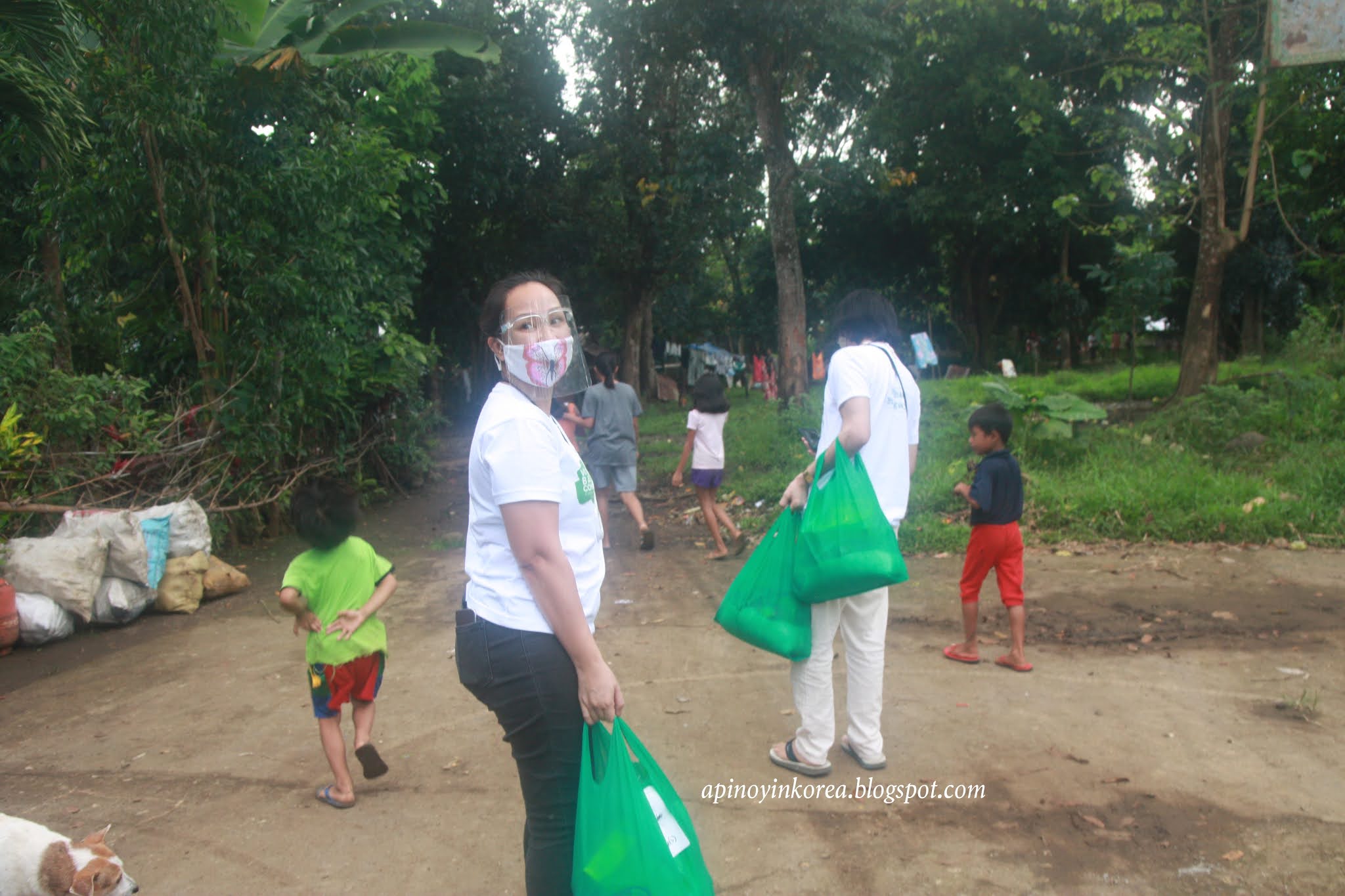
And in order to give these families a reason to smile about, the Victorias Barter Community, led by Ms. Nonalyn Librodo, chose 50 families, which were nominated by members, to receive Christmas packs that contain rice, Spam and other canned goods, coffee, bread and sandwich spread, and for those who have children, infant formula and diapers.


These goods were donated by some members of the Victorias Barter Community who simply wished to share.👪💓

To deliver the gifts, a team of volunteer members went to visit the beneficiary families living in barangays close to the city center. They also went to the areas of Florencia, Gaston, Cubay, Hda. Nenang, Aji, Villa Victoria and Hacienda Carugiat, that were far from the city center.


The volunteers did not care about how far or how difficult it was to deliver the Christmas packs. 

This was about sharing, caring, and looking after the members of our community who need help the most.


More than just a vehicle for exchanging or bartering, these online communities should be an instrument for members to share with our brothers and sisters who have less, not only during the Christmas season but all year round.😍

The photographs on this blog were taken during the visits to some of the beneficiary families of the Victorias Barter Community's Christmas 2020 sharing.😎


"We don't care about being tired or how far we need to go in order to bring happiness to our brothers and sisters." - Victorias Barter Community


Ang ila mga yuhum nagdala guid kalipay sa mga naghalatag.💝

Their smiles bring joy to those who shared.💖

Monday, 30 November 2020

The 1803 Frontliners: Dr. Francisco Javier de Balmis and The Royal Expedition to Eradicate Smallpox

Researching for another chapter for my Victorias History blog (read here) during this Covid-19 pandemic, I learned that, other than 1900s cholera epidemic, the contagious smallpox also swept the Philippines at the turn of the 18th century. 

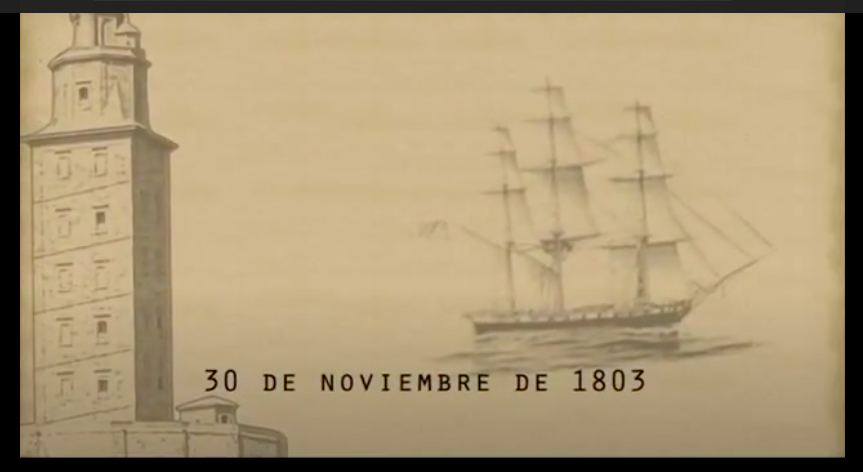
(A sketch of the famous Torre de Hercules of
 A Coruña in Spain and the ship, Maria Pita)

And after reading more about the smallpox epidemic, I decided to blog about it as a tribute to the people who helped stop the spread of the disease in the Philippines, saving more lives than anyone could have ever imagined. 

Although it was 217 years ago, I found a personal connection. The connection is the Spanish coastal city of A Coruña (click here), the city where the royal expedition sailed from on November 30, 1803. It is also the home of my good friend Kiko, who showed me around his hometown a few years back!😃

(The expedition's route from Spain to the 
Americas  to Las Filipinas and back to Spain 
that lasted from 1803 to 1806)

Royal expedition
The expedition was officially called Real Expedición Filantrópica de la Vacuna or the Royal Philanthropic Vaccine Expedition. 

It was a royal expedition as it was funded by King Charles IV, the king of Spain at that time, who ordered the vaccine to be shared among his colonies on the other parts of the world.

The smallpox vaccine, the world's first vaccine (and yes, 'Hecho en España'!), was discovered in 1796 by Dr. Edward Jenner of England. 

Dr. Jenner successfully created the vaccine from cowpox virus after he learned that milkmaids did not catch the smallpox because they were already exposed to cowpox, a disease in cows. That's why the word vaccine originated from the Latin word, 'vacca', which means 'cow'.

And while the smallpox vaccine was available in Europe, it was not available in the Spanish territories in the New World. That's why King Charles IV appointed his royal surgeon, Dr. Francisco Javier de Balmis, to spearhead the expedition that eventually brought the vaccine to the Canary Islands, Central America, South America, the Philippines, and China.
 

In order for the vaccine to be brought to the Americas, Dr. Balmis needed human hosts to carry it. That's why he brought 22 orphans from A Coruña along with a deputy surgeon (Dr. Jose Salvany), two assistants, two first-aid workers, three nurses, and Sra. Isabel Zendal Gomez, the directress of the orphanage (Casa de Expósitos) in A Coruña where the orphans came from. They sailed on a corvette named after the Galician heroine, Maria Pita.

Since the effectiveness of the vaccine was short-lived and they didn't have the technology, like refrigeration, to prolong the 'shelf-life' of the smallpox vaccine, Dr. Balmis needed the healthy orphans to carry the vaccine in their bodies during the long trip to the Americas. How? Every ten days, the live vaccine was transferred from one orphan's arm to another until they reached the New World. Monuments for these 22 Spanish orphans from Galicia were installed in A Coruña, Spain (click here for the video).

According to the list, the orphans aged from three to nine. So very young!😱 

These kids probably thought they were just going on a sea trip as they were too young to comprehend what momentous achievement in medical and human history they were going to be part of.😇


(The names and ages of the Spanish orphans

Las Filipinas
After a successful expedition in the New World, Dr. Balmis left Acapulco, Mexico on February 8, 1805, for Las Filipinas.

On April 15, 1805, Dr. Balmis with 26 orphans, who, this time, were all Mexicans, arrived in Manila. 

There was an initial reluctance from Filipinos against the idea of the vaccination, especially from the Catholic Church during that time. But after the Governor-General Rafael Aguilar made an example by having his five kids inoculated, everyone else accepted the cure. The Philippine expedition of Dr. Balmis inoculated about 20,000 Filipinos.

Sacrifice for humanity
The Balmis expedition did not end in Las Filipinas. 

Bringing with him three Filipino orphans, he sailed for China and eventually returned to Spain in 1806. (Sadly, I could not find records of the names of these Mexican and Filipino orphans, or which orphanages in Manila the Mexican orphans were later sheltered, or whether the Filipino orphans were brought to Spain or sent back to Manila😓).

As gratitude to King Charles IV, a monument was erected in his honor in 1824 at the Plaza Roma in Intramuros, Manila. 

The Balmis expedition has been hailed over the centuries as one colossal humanitarian effort that has no equal in world history. Millions of lives in several continents have been saved by the sacrifice of a few, including the very young orphans who sailed on boats across the high seas in order to save people they did not even know. 

              (Arriving in Manila on April 15, 1805)

And on setting foot on foreign lands, they brought more than just a cure for a disease. 

And in our time in this new pandemic, we all remember Dr. Balmis and his 'frontliners' of 1803-1806.😍 

And for us here in the Philippines, let's be grateful for those orphans' sacrifice for humanity because, two centuries ago, they saved the lives of Filipinos - a people from a world they did not even know.🙏

                              *  *  *  *  *


(That's me being dwarfed by 
the Torre de Hercules 
in A Coruña on a cloudy morning😎)

#vaccine #balmis #acoruna #spain #galicia #mariapita

Saturday, 28 November 2020

The Popular Online Cooking Classes @ Itaewon Global Village

Even during this pandemic, when international tourists couldn't visit Korea even if they want to, it's Korea that visits them at home! Virtually, that is!

Over the years, I have blogged about my favorite Korean dishes: from soondae to buddae-jiggae, to seolleong-tang, to mandu, and even to my favorite duo, kimbap and cheese ramyeon (read blog here)!

And thanks to the Itaewon Global Village in the Yongsan District of Seoul, everyone - no matter where they live in the world - can learn how to cook Korean dishes without having to fly to Korea during this pandemic!🙇

(A screenshot of the online class on Youtube)

On November 28, 2020, a Saturday, the Itaewon Global Village conducted the online class featuring the CEO of a Korean food company, Naturellemente, Ms. Lee Mi-Gyeong.

Ms. Lee taught her online students how to make everyone's favorite, japchae, and my favorite street food, hotteok. 

Japchae was the chosen dish because the ingredients required were easy to find. Although traditionally, japchae has beef, one can also eliminate this ingredient from the recipe to make it a vegetarian dish. 

Hottoek, on the other hand, has been a popular request among foreigners. That's why it was included.

     (A screenshot of the Zoom participants)

During the live Zoom class, there were 43 attendees, all of whom tried to replicate what Ms. Lee was doing in her kitchen. And for everyone's benefit, there was an interpreter present who translated Ms. Lee's instructions into English.👍

What was interesting was that, other than the proper way to cook the recipes, Ms. Lee gave out tips to her students. Although I don't really cook, I appreciate knowing about those little tips. One can learn a lot from a teacher who has a wide experience and expertise.😄

According to Ms. Katherine Corteza, who has been the director of the Itaewon Global Village since March 2014, they decided to hold online cooking classes so everyone could join from the comfort and safety of their home, enabling those living overseas to experience Korean cooking virtually, and give those living alone to have an occasional online interaction with other people.

The Itaewon Global Center has future online cooking classes lined up for everyone interested. Do sign up for their newsletters through their Facebook page. Other than the online cooking classes, the Center will be conducting a webinar on mental health, and online painting and taekwondo classes.

Aside from the Seoul Global Center in the Jongno District, the Itaewon Global Center, run by Ms. Corteza and her team of five, is one of the seven village centers in Seoul that help and assist foreigners living in Korea in matters of daily living. 

Having availed of their services, I appreciate and am grateful for their help and assistance in all my years of living in Seoul, especially during the time when I applied for a permanent resident visa (read blog here). 😍 

If you missed the live online class, the Youtube video below is the entire episode. You can watch it anytime whenever you crave for japchae and hotteok.😎


And do watch out for the schedule of their next online classes!😋

Saturday, 14 November 2020

The Solemnity of Our Lord Jesus Christ, King of the Universe


In 2019, late last year before everything was turned upside down by this pandemic, our local parish church held a procession to celebrate the Solemnity of Our Lord Jesus Christ, King of the Universe.

The short procession started from a chapel in a barangay hall and meandered through a few streets under the afternoon sun, and finally made its way to the church. Our parish priest held the Holy Sacrament while riding a moving vehicle as residents waited along the road with lighted candles and quiet veneration.


Along with members of parish organizations, parishioners joined the procession and later attended the Holy Mass to celebrate the feast.🕐


This year, in this pandemic, the celebration will be confined within the church to follow the Covid-19 restrictions with limited number of parishioners in attendance. 👪

Although it would have been more meaningful that a recorrida was held where the Holy Sacrament and the parish priest rode open van as it roamed the city where residents along the route might again light candles to honor the Sovereignty of Christ as King of the Universe and to pray for His intercession in these difficult times.🙏  This was done by other parishes to celebrate the feast. 👌


The Feast of Jesus Christ, King of the Universe was instituted by Pope Pius XI in 1925 to celebrate the Jubilee Year and the 16th centenary of the Council of Nicaea. It was also to remind the dictators of the world at that time (Mussolini, Stalin and Hitler) that Christ was the only Sovereign King. ♔

Perhaps, this should also remind today's leaders and public servants that truth, honesty, and integrity should govern their lives and work ethics, and not greed and corruption. 🏠 

These photos are from the 2019 'Christ, the King' procession of the Our Lady of Victory Parish in the Diocese of Bacolod, Philippines.🇵🇭


Thursday, 1 October 2020

(Part 2) A Victoriahanon 1940 Historic Photograph: Don Felix Montinola and His Honored Guests

And out of nowhere, this black-and-white photograph, that was hiding in the dark for decades, saw the light again.😎


But before I talk about the one above, let me tell about the one below - the photograph I stumbled upon five years ago that is about Don Felix Montinola and his guests at his birthday luncheon (read blog here). 

                   (Guess who came to lunch today.🍴)

With the help of certain people who were kind enough to share their memories, I was able to identify some guests on that table.


And all these years, I thought it was the only photograph taken during that special occasion celebrating the 76th birthday of the young town's 9th mayor. After all, in 1940, you would have to visit a photographer's studio to have your picture taken.


Or in this case, you needed to invite one to your house to capture the memories of the day.😄


And then, last week happened.😱


Just by chance, another photograph came to light, literally. I was told it was hidden in a tin box for decades along with a few other important black-and-whites and I presumed this one was taken before everyone sat for lunch that day. Some guests in the photograph taken at the comedor probably arrived late as they are not in this photograph taken at the sala.


Fortunately, this 'new' one was safely kept all these years, hiding in the dark. But it suddenly resurfaced as if the faces in the photograph yearned to be remembered once more.😊


This is the photograph, taken in 1940 and colorized in 2020, and taken by a photographer from Gamboa's Studios of Silay.😉


("Recuerdo en el 76 cumpleaños del alcalde Dn Felix Montinola Victorias, 17 Febrero de 1940")


Just like the one taken at the luncheon table, still sitting in the middle are Doña Dorotea Magalona Montinola, former governor of Negros Occidental Valeriano Gatuslao (to her right), and Don Felix Montinola (to her left).


Behind them standing (among other guests) are Don Felix's children and his son-in-law. 


From left to right and starting with the lady standing behind Governor Valing Gatuslao are Doña Quintina Montinola-Fermin, Victorino Fermin (her husband), Doña Salud Montinola (behind Doña Dorotea), Doña Luz Montinola (the lady in a white dress with black buttons), Don Hector Montinola (the 12th mayor of Victorias), Don Felix Montinola, Jr., and Don Benito Montinola (the 14th mayor of Victorias).


The gentlemen standing on the leftmost (with hands in pockets) is Don Epifanio 'Panyong' Torre, who had three children: Dr. Pablo Torre, Alfonso Torre (father of actor Joel Torre), and Lina Torre-Ascalon. 


Although we don't have a name for the foreigner standing to Don Panyong's left (must be an American), the ladies next to the foreigner are Lina Torre-Ascalon, Nita Ardosa-Ortigas, and Choleng Suarez-Ascalon, who's wearing a black dress. The gentleman (partially covered and standing behind Lola Tina (Quintina Montinola-Fermin) is Tony Ascalon, the husband of Choleng Suarez Ascalon and father of Jerry Ascalon, the architect of the Chapel of the Cartwheels. 


Also behind Lola Tinay is their next door neighbor, Don Porfirio 'Piryong' Ascalon. Next to 'Don Piryong' is Dr. Ramiro Hinlo and Jose Jover.


The gentleman behind Tita Luz (lady with black-buttoned white dress) is Dr. Licaros.


And just like the 1946 family photo of Don Viling Montinola taken in Jaro, Iloilo (read blog here), I was able to find how his (Don Panyong's) path crossed mine.


Don Panyong's daughter, Lina Torre married Gregorio Ascalon, who had a big house next to the school grounds of La Salle in Bacolod City - a house that they converted into a dormitory. And guess who boarded there? I DID! (I am from Victorias and I needed to stay in a boarding house in Bacolod City for convenience and probably for health reasons as well.) 😎


Their daughter, Mrs. Marilen Ascalon-Castellano, ran the dorm, which was separated by a creek from the school but was connected by a short footbridge. That black-painted pedestrian bridge was about ten steps long but I took less when I crossed into the school grounds. 


The bridge was made of wood and steel bars that shook when students crossed, and on some occasions, some boys deliberately shook it to frighten the girls crossing. And yes, flirty girls could be heard screaming as if they were actually going to fall into the creek. Both sides of the bridge were covered with cyclone wires probably to prevent students from jumping off when they get failing grades in Business Math, Cost Accounting or even P.E.😂


I am grateful for that bridge; I was never late to class.😀 I stayed at Nang Lina's dorm for two years during my junior and senior years as I finished my degrees in Economics and Accounting at La Salle. 😍


Going back to the photo, on the opposite side, the lady standing and carrying a baby is Inday Lydia Ledesma Quiatchon. The boy is Jose Victor Fermin, while the seated lady touching the boy is Inday Elsa Ardosa. 👪


So, thanks to the photographer from Gamboa's Studios that day who went to visit the old Montinola mansion in Victorias and choreographed the family and their guests at the sala, and who captioned photo in Spanish, we are able to get a glimpse of the life Negrenses led in the early 20th century, although I am not sure if the colors painted by the colorization app I downloaded are as close to the story the original black-and-white told. 😉


Sadly, in about two years after this photograph was taken, on May 27, 1942, the people of Victorias finally came to terms with World War II when Japanese soldiers walked into the town (read blog here), although even before that, the Montinola family endured the tragedies of war when four of its family members became the first Victoriahanon casualties of WWII on December 16 (or 17), 1941 (read blog here). 😭


As my sources for this photograph could not recognize the other faces therein, I share this with everyone whose ancestor might have been one of those guests who were welcomed into the home of Don Felix that day in a time when peace and prosperity were enjoyed by the Negrenses. 🙏


Now, on to the next find...😛

Wednesday, 23 September 2020

Seven Safe Things To Do During The 2020 Chuseok Holidays

Having lived in Seoul for many years, I have experienced first-hand the two most important holidays in Korea: Seollal and Chuseok!

And during these holidays, I always had something else to do when everyone else was heading to the Korea countryside to attend family reunions and pay their respect to their ancestors.

Although this year is a bit tough to move around, everyone is still looking forward to a five-day weekend. The holidays will start on September 30, a Wednesday, even as Chuseok falls on October 1, Thursday, and will run until the weekend.

Being a foreigner living in Seoul, these long holidays always afforded me to do the things I have always wanted to do like discovering the hidden alleys in my neighborhood of Hannam-dong, visiting the Lotte World Tower and KLI 63 Building, and spending afternoons walking around Insadong, Garuso-gil and Namsangol. My other holiday activities included taking photographs around the palaces, watching musicales at Daehangno and plays at the National Theater of Korea, and watching movies at cinemas.

This year, though, amidst the Covid-19 pandemic, I listed activities you can do during the Chuseok holidays while wearing a mask and keeping the social distancing protocol when venturing outside your home:

1. Clean your apartment
Yes, wouldn't it be fun to finally clean those dirty corners of your apartment, and sweep all the dirty and dust underneath your bed? Or perhaps, it's the best time to reorganize your closet as you need to put away your summer clothes and bring out the sweaters and coats in preparation for winter. 🏠

2. Videochat with family and friends from your home country
If you haven't kept in touch with your old friends, old classmates and relatives, maybe it is time to reconnect with them. Also, you may have longer chats with your parents and siblings since you have all day long to do so! 💻

3. Send holiday wishes to your Korean friends
While your Korean friends may be driving down south or taking the KTX to their home provinces, it would be nice to let them know that you share the holiday spirit with them.🚄

Over the years, I learned that my Korean friends actually hated family reunions because they were pestered with questions like "When are you getting married?", "Where do you work?", or "Do you have a girlfriend/boyfriend?" 😄

Not only that, they hated family reunions because they are always being compared with their cousins in terms of academic achievements, universities they went to, or even professional success and wealth.

So, you can probably message your Korean friends and tell them to take those questions lightly and wish them well on their work, life, and their quest on finding a lifelong partner.


4. Brushing up on your Hangeul
It's also a good time to go online and open your Korean language textbook  and continue building up your Korean language proficiency. I wish I should have done this more. But since I usually toured around Seoul during the holidays using my survival Korean, I thought I could get by what I already had.

5. Watch online movies and Korean dramas
Some Korean drama fans hold their drama marathons during weekends to catch up on the episodes they missed. Well, since you have five days of free time, you can finish more than one drama this time.

6. Jog along the Han River bank or climb a mountain, or play some non-contact sports

Exercising while wearing a mask is still allowed provided you keep your distance from other people. The jogging paths along the Han River banks are kilometers long, so it shouldn't be crowded. You can just walk or run at your pace while making sure you keep your distance.

You can observe the same protocol while trekking up Namsan, Inwangsan, or other mountains in Seoul. The colors of the leaves should be nice this time as autumn is setting in.

Since tennis is not a contact sport, it is allowed. And there are many tennis courts in neighborhoods and universities that are usually free and outdoors.


7. Learn how to cook Korean dishes at home
Wouldn't you want to brag that you know how to cook a jji-ggae or bulgogi? Or even chap-jae? You can find a lot of online videos teaching people to cook Korean dishes as long as you have all the right ingredients at home. And with enthusiasm, you can probably cook different dishes every day during the holidays.

So, there. Seven activities that you can do safely during this pandemic and you can always add a few more in case you have done them all. You can even write short stories about your life in Korea, or even start a painting hobby!📕

But whatever you wish to do, have fun and enjoy the Chuseok holidays!🙌