Friday, 28 August 2020

A Korean Drama Class at the University of the Philippines and Why I Can Probably Teach That Class 😊

Last week, I stumbled upon a piece of online news on Philippine media that I immediately thought would bring a lot of excitement to Korean drama fans in Manila:  a class about Korean drama at the University of the Philippines (UP).


But it wouldn’t be easy signing up for this class though.  Only students enrolled at UP were allowed and, worse, only 26 can attend per class.


Looking at the course information on UP’s website, I saw the enumerated requirements for the students before enrolling:  must have access to the drama online, must download video conferencing apps on their laptop or gadget, and pre-class reading, or shall I say, pre-class watching of the dramas. Each student must watch beforehand the dramas Crash Landing On You, Chicago Typewriter, and Misaeng: Complete Life.


Although I am not familiar with Chicago Typewriter, the other two dramas have been popular with their genres I am very familiar with.


First, Misaeng: Incomplete Life.


This drama is about an intern’s life in a Korean office, and although I lived in Seoul, I never knew about it as I didn’t watch the local television. It was only when my Korean colleague and friend Dong-Eun told me about it because the drama was being shot at Seoul Square, the building where he worked.  Seoul Square is the huge, brick orange-colored building across Seoul Station (read blog here).


(During breaks at my office in Seoul, I enjoyed 
my hopia from the Chinatown in Manila brought by visiting friends from the Philippines)


Dong-eun also told me that, even before the drama aired, some cast members visited their office to research about the typical Korean workplace.  He even met Im Si-wan, the lead actor, and had a selfie with him (he showed me!). I told him that I only saw Im Si-wan dancing and singing onstage as a member of the boyband ZE:A during the K-pop concerts that I was invited to as a blogger for the Korea Tourism Organization (read blog here)

But speaking of the typical Korean office, in my decade-long of working for a corporation in Seoul, I have learned the dynamics, politics, hierarchy, and the culture of the Korean office and its workers. And aside from the regular employees, I met and made friends with our office interns, the character played by Im Si-wan in the drama. 

Most of these interns were in their late teens as they were still in college and were just on a break from their studies.


I observed that these interns were the most energetic (they could do chores without getting tired the whole day!), the most enthusiastic (they were willing to do anything to help!), and the most dependable (you were always sure any chore you assigned to them gets done!).😎 


I don’t know what chores Im Si-wan was made to do at the drama but I think the interns at our office could have easily outdone him.😆 


And yes, it’s true that Korean employees don’t even try to leave if their bosses are still around and that nobody turns down an invitation from the boss to drink after work! One would have to give up an internal organ for a promotion!😄


(An afternoon in a Korean office wouldn't be complete without coffee. For me, it's iced cafe mocha. Always! Coffee shops around offices are full of Korean office workers during lunch breaks because everyone wants to get a hot cup of cafe americano.☕)


And what about Crash Landing On You?


Well, it’s about an incredible story about a billionaire’s daughter who paraglided at the border with North Korea but was blown northward and landed on the wrong side of the demilitarized zone or DMZ. In my case, I didn’t have to paraglide into North Korea. I simply rode a tourist bus (read blog here).


(At the Mount Kumgang resort standing 
in front of a meticulously created giant mosaic 
of two known figures at the north)


About 14 years ago when the mountain resort in North Korea's Geumgangsan (or the Diamond Mountains) was still open to foreign visitors, I joined a group of Korean and international tourists in crossing the border for a weekend.


It was surreal to pass a small immigration office, cross the two-kilometer South Korean side of the DMZ by bus, and then cross another two-kilometer portion of the DMZ’s northern side. 


Upon arriving in North Korea (at first I couldn't believe I was actually there!😱), we were herded to a tent where we quietly passed through passport and security checks (during this time the talkative people in our group were unusually silent knowing we were no longer in SK!)


Our bags were inspected for cellphones and reading materials as we were not allowed to bring these in. And knowing we were being watched everywhere we went at the resort, my friends and I were careful not to do the things we weren’t allowed to do, like taking photos of the locals and the military outposts.


(The mountain resort has trails for the visitors 
and it was simply breathtaking to see 
the unique stone structures of what 
the locals call the Diamond Mountains.)


There, I was face-to-face with soldiers from the north, who, I assure you, didn’t look at all like Hyun Bin. And the billionaire’s daughter who paraglided? Well, let’s just say she and her free-flying glider would have been turned into a target for practice shooting by North Korean soldiers even before she could crash land on Hyun Bin.😂 And if you read the news about the physical and mental state of soldiers from the north who endured everything just to cross the DMZ just to defect to the south, you might not be at all amused about all the romanticizing about the way of life north of the border.


Yes, it would be fun for Korean drama fans to get together in a class where their grades would probably be based on how much they fell for those actors and the characters on the screen. But I think studying these dramas would have been deeper and the class discussion more fun if the teacher and students have actually lived the experience, knew the culture, and are able to tell what’s drama and what’s reality.


Now, shall I also teach my own Korean drama class?😊

Sunday, 23 August 2020

The Quarantined Life: My Mom Got Addicted To 'My Golden Life' Drama

All this free time that we are required to stay home was all that was needed for my mom to be reunited with her Korean dramas.

Years before, when I flew home to the Philippines from Korea during vacation from my work in Seoul, I found my mom watching Korean dramas every night on Philippine television. These dramas were dubbed in Pilipino, which made the dramas understandable for her.

I remember her watching Goblin a few years back (read blog here) when I was home in the Philippines, a drama I never attempted to watch when I was in Seoul but was a big hit everywhere else. I felt like I didn't need to be entertained by those dramas because, after all, those characters were just like my neighbors or my colleagues at work, or even my Korean friends.😊

And over the years, when my Filipino friends came to Seoul (read blog here), one of their reasons, aside from shopping, was to visit the shooting locations of their favorite Korean dramas.👭 

For my mom, her daily dose of the Korean drama, 'My Golden Life', started when she saw an episode over a local Philippine channel. But when I learned that she had to wait for another day for the next episode, I searched whether it was available online. And it was! All 52 episodes!😄
(I told my mom that this scene shows the NSeoul Tower 
that we visited when she toured Seoul a few years back)

Thanks to the Korean channel KBS World that uploaded it on their Youtube account, she parlayed through the episodes non-stop, enjoying the scenes and dialogue as it had English subtitles.

Of course, a few times, I sat down with her and reminded her on scenes where she had been at during her visit to Seoul a couple of years back (read blog here).

And while she was watching the drama, I asked her why she liked it. Her reasons: the actors were good-looking, the story was very interesting, and everyone dressed up nicely.

Those were the most obvious reasons why Korean dramas are popular. Their productions are well-financed that they don't scrimp on budget: they fly to other countries to shoot, they get tons of fashionable wardrobe for the cast, and leave no strand of hair uncoiffed. Of course, it also helps that their make-up are impeccable to make sure their faces and skin looked flawless on the high definition, wide-screen TVs they are watched on.

And when my mom got immersed after watching a few episodes, she wanted to continue watching even if it was late at night. I had to remind her that she could always watch the next episodes the next day. She reasoned that she couldn't wait to know what happened next. 

What happens now to Do-Kyung after he got banished from home by his grandfather?😀

Would Ji-an end up with Do-Kyung?😃 Will her father get well from his sickness?

What kind of tasty bread they make at that bakery?😋

And since it's a drama, she enjoyed how Ji-an and Do-Kyung (the good guys) had a happy ending they deserved, and that the bad guys (the grandfather and kidnappers) and bad girls (Do-kyung's mother) finally met their fate, including the catfight with her mayordoma.

(I reminded my mom that the monument at the background is Sungnyemun, 
in front of which she posed when we visited the Namdaemun Market.)

Things happen for a reason, they always say.  And if this quarantined life caused by the pandemic didn't happen, my mom wouldn't have been able to religiously watch and enjoy the drama 'My Golden Life', learning more about the Korean life as each episode passed and grew fondly more as each character revealed themselves, played by actors who captivated audiences, other than my mom, through portrayal and stories that transcend nationalities, cultures and languages.😍

Now, what's the next Korean drama should she watch?😎 

Saturday, 15 August 2020

My Korean Neighborhood: "Love Thy Neighbor" - Means Buying From Them!


I was on my way home to the Dongdaemun District one mid-morning from my weekend tennis in Daechi-dong in the Gangnam District of Seoul when I passed an ajumeoni (a Korean woman of grandmother age) sitting on the concrete sidewalk where she laid a yellow mat to display her colorful hankies. I was rushing since it was turning cloudy and looked like it was going to rain soon. Her spot was just a few meters away from my apartment building.

There was hardly any pedestrian around, much less a customer for her wares, so I decided to stop and contribute to her sales that morning.

After I greeted her, she looked up and had a surprised look, probably not expecting a prospective customer that quiet morning. I immediately saw the red handkerchieves that my mom would like and asked her for these. I got three for KRW 10,000.

She thanked me and said something in Korea that sounded like she didn't expect a man buying from her.

She had buena mano sale and I got red hankies for my mom (she loves red!) when I fly home to the Philippines.

If the ajumeoni was happy, I was happier for I was able to help a neighbor and already got presents for my mom.🎁

That's what we should do: help our neighbors.😋


I have lived in two districts in Seoul, South Korea: Yongsan-gu and Dongdaemun-gu, and although both districts have different characters, they have hidden alleys and corners that I loved to stroll around to discover the local mom-and-pop stores and family restaurants that serve Korean dishes that are yummier than those served at fancy diners and food courts.

Yes, these alleys are not the ones you'd read in tourist blogs and tourism websites but they host the yummiest soondae-kukbap (read blog here), the yummiest mandu (read blog here), or the yummiest kamja-tang (blog)

(I also patronize street vendors whose desserts are much more enjoyable and yummier! Plus, you get to know the vendor and watch him make your dessert that add a personal connection to your Korean experience!)


(A basket of oranges sold for KRW1,000 
at Cheongnyangni Market!)


(Enjoying soondae-kukbap - soondae in a soup with rice - at the soondae restaurant a few meters from my apartment building in Dongdaemun District. I bring my own dessert and soda sometimes as they don't have any.😄)


Instead of heading to a mall's food court or to a restaurant in Myeongdong, I'd rather stay in my neighborhood and patronize these family restaurants. That way, I am able to get to know their specialty dishes and help contribute to the economy of my neighborhood. 

I also buy my fresh fruits, not from the supermarkets, but from the traditional markets where farmers unload their fresh produce where you can them at the cheapest prices.

So, there. "Loving thy neighbor" is helping them by patronizing their family business!😍


Friday, 7 August 2020

Recuerdos del Pasado: An Affectionate Remembrance From Jaro To Victorias - and Back To Jaro

Over the years, whenever I came home for vacation from my work overseas, I would rummage through my mother's collection of old photographs and try to find out if I knew the faces of the people on those black-and-whites. 

And on a few occasions, my scavenging produced a few blogs that were fun to write. 

From the first ones about the belles of the town that included my godmother as the town fiesta queen of Saravia, now E.B. Magalona, in Negros Occidental (read blog here), to the 1940 photo of the birthday lunch of Don Felix Montinola (read blog here), the mayor of Victorias from 1935 to 1941, and about a postcard with one daughter's endearing message written in Spanish for her mother (read blog here)

"Viling y familia - Jaro Iloilo 8/9/46"

There was even a photograph that's a hundred years old, probably the oldest in her 'ba-ul' of old photograph collection. The photograph from 1920 was of Don Felix's daughter who eventually became one outstanding haciendera in the Negros island, beating the men in their own game in the 1960s (read blog here).

But the latest black-and-white photograph I stumbled upon was a picture of a family, whose faces unfortunately I don't recognize, but on its back are these words written in Spanish:

"Un afectuoso recuerdo a nuestro querido tio Felix y familia - Viling y familia - Jaro Iloilo 8/9/46"

Translation: "An affectionate remembrance for our dear uncle Felix and family - Viling and family - Jaro Iloilo 8/9/46"

Realizing that there must be a story to this picture, I had to know who this family was - a family who posed together at a place I assumed was their home in "Jaro" and even hired a professional photographer who visited their house for this special photoshoot. 

Jaro, now a district in Iloilo City in Panay Island in the Philippines where rich families lived and had heritage mansions, was a city upon itself during the Spanish times. And in 1946, a year after World War II ended, one would have to visit a photo studio for a picture, although I am not sure if "1946" was the year the photo was taken or it could have been the year Don Viling gave the photo to his uncle.

Here, the photographer from 'Palau Studio' (written on the lower right side of the photo) photographed them at home. And I was glad he did because one obvious element in the picture helped me locate it! And it's a famous mansion!😄

All I needed was a name. But instead of just one, I got two from my mom: 'Viling Montinola' and 'Salud Escarilla', his wife.😂


From there, researching about it was a walk in the park, so to speak.😀

In the message, "tio Felix" was Don Felix Montinola y Lozada, while "Viling" was his nephew, Don Virgilio Montinola y Jalandoni. He's the one sitting at the center with a child on his lap.

Don Virgilio's father, Gregorio Montinola y Lozada, who was born in 1858 and died in 1934, was Don Felix's older brother. Gregorio's first wife was Matilde Jalandoni. Don Felix, on the other hand, was born in 1865 and died in 1949. Gregorio and Felix were sons of Benito Montinola y Vasquez and Quintina Lozada y Villa, who had eight children.

So, this picture was given by a thoughtful nephew living in Jaro to his uncle living in Victorias. His "tio Felix", although born in Jaro on February 16, 1864, moved to Saravia in the Negros Island to find his fortune and eventually, love by marrying the daughter of the mayor of Saravia in 1897. "Tio Felix" later moved his family to Victorias to be closer to his haciendas in the north (read blog here).

This was an endearing memento to his uncle saying that, even they were far apart (actually separated by Iloilo Strait😄), he and his family would always remember his tío and his family. The handwriting also made me ask: was this Don Viling's handwriting? Because, to me, it looked like it was written by a woman. Was this actually Doña Salud's?😲  

Having identified the family in the picture and established how this family photograph ended up in Victorias where Don Felix lived and died, I realized one should never disregard a photo just because you don't recognize any of the faces in it and that it was of a time past and generations ahead of yours. And although I may not be related to any of them, somehow, somewhere their stories crossed mine.

Here's how.😊

Don Viling's younger sister, Doña Caridad Montinola, the lady standing behind him, owned an apartment complex along with another sister, Doña Fe Montinola, located along Arquiza St. in Ermita, Manila. It was named Fe and Caridad Apartments that was probably built in the 1950s where celebrities and old-timers of Ermita lived. 

Since both women were unmarried and had no children when they died, they left the apartment complex to their youngest sister, Doña Herminia Montinola, whom everyone calls Inday Miniang. And guess where my siblings and I once stayed during a summer vacation in Manila? 

At the Fe & Caridad Apartments!😊 

I remember we stayed at the topmost floor which was the residence of Inday Miniang. It had a view of the red light district of Ermita and a 360-view of the area when you went up the rooftop. Her heirs must have sold it because it is now a hotel.

Although at that time, Inday Miniang already passed when we stayed at her apartment complex, I also remember being introduced to her when I was kid when she visited Victorias. She wore a blue floor-length house dress with her hair coiffed like the doña's of old and when I made 'mano po' on her hand, it was very soft and delicate. 

And what about Don Viling's house (I assumed he was the one who had it built but I now thought maybe not) where the photo was taken? 

At first, I didn't have any clue as to where in Jaro his family lived and where this photograph was presumably taken. But when I studied the family tree of "Viling" and his siblings, the family name of the husband of his only married sister caught my attention: Sanson

One of the famous mansions in Jaro that I heard and read about is called Sanson y Montinola Antillan House. So, I asked myself, "Could this be the same house?"

I googled and thanks to two websites, I was able to prove that it is, indeed, the same house! 😋

From the BluPrint architectural website, I matched the tiles on which the family posed, while from Travel Guide Iloilo website, I matched the chairs on which the family sat.
The screenshot above is from BluPrint architectural website showing the floor tiles of the house's living room - the same tile design seen on the black-and white photo.


Above is a screenshot, from the article of Travel Guide Iloilo website featuring the house, that shows the chairs designed with pointed ears. The single three-seater in the screenshot looks like the same three-seater where Doña Salud, Don Viling and a daughter were seated, while the two single-seaters (on the right) look like the ones where his daughters separately sat in the family photo.

Unless there's another house in Jaro with the same tiles and chairs, this is one and the same house.

So, there. 😊 

The photo of Don Viling and his family was taken at his home in Jaro presumably in 1946, although I can only assume he was the one who had this mansion built. He was born on July 30, 1893 and died on July 23, 1953, a few days shy of his 60th birthday. Doña Salud, however, was born on February 5, 1901 and died on March 28, 1976.

The last time I saw Don Viling's mansion from afar was last February 2, 2020, when we went to Jaro for the feast of the Nuestra Señora de la Candelaria. 

As our transport drove through E. Lopez Street, I saw his home from the road, knowing that it was the famous 'Sanson y Montinola Antillan House' and hoping that someday the owners would open the place to the public as I would also love to see it. I never realized then that Don Viling, once the patriarch of that heritage home I saw from the street, would show up in my stories.

And here's one more trivia.😛

My mom told me that, decades ago, long before the digital age, she actually visited the house a few times on an errand. She took the early ferry from Bacolod City to Iloilo City that day and swung by Don Viling's house as one of her stops before she went back to Negros in the afternoon. I was probably at school that day as I wasn't able to tag along. Had I gone with her, that could have been a better ending to this story. 😝

And while I was at it, I colorized the family photograph. 

And in case the descendants of Don Virgilio Jalandoni-Montinola and Doña Salud Mirasol-Escarilla have lost their copy, this 74-year old memory is for you. 😍

Black-and-white photographs always tell the most colorful stories.📷


* * * * *

PS. I wish the current owners of the property would open this heritage home to the public for a fee just like Camiña Balay nga Bato in the Arevalo District of Iloilo City or the Balay Negrense in Silay City. The fees collected would pay for the maintenance and upkeep of the place.

I also wondered why this heritage home was named Sanson y Montinola Antillan House, instead of Jalandoni y Montinola Antillan House when it seemed that this property was the home of the children of Gregorio Montinola and Matilde Jalandoni.😋

Monday, 29 June 2020

El Botafumiero: Fumigating Pilgrims And Civil Servants 😆

It was a cold autumn morning when I found myself on top of the Cathedral of Santiago de Compostela in Spain, walking on its roof and history. I joined a group of Spanish tourists and being the only non-Spaniard in the group, I could barely keep up with the conversation led by Lidia, our assigned Cathedral tour guide. 

I figured, even if I didn't quite understand a few sentences, with some palábras not yet in my Spanish vocabulary and conjugation way beyond my Level 4 Spanish at Instituto Cervantes de Manila, I was determined to enjoy the Spanish-language tour.😄

But after almost two hours of discovering the hidden corners of the Cathedral not accessible to the pilgrims below, we finally found ourselves at the loft watching the crowd of pilgrims at the nave and the glorious altar of Saint James, the Great from afar.

As the tour ended, we all descended the stairs hidden on the left side of the nave and went on our separate ways. I, on the other hand, went right up closer to the altar and chose a spot on the right, next to a huge column that supported the same roof I was just standing on earlier. The reason for choosing this spot?

The botafumiero.😍


(The Archbishop Julian Barrio Barrio celebrates the holy mass with the pilgrims from all over the world)


The botafumiero is the most famous thurible in the world. A thurible is a metal censer that is used in many churches and religions around the world. In Santiago de Compostela, the botafumiero ('smoke expeller' in the Galician language) is used at the Cathedral as part of the tradition that's more than 600 years old.

It was almost noon when I claimed this spot. Soon after, the mass officiated by no less than the Archbishop Julian Barrio Barrio of the Cathedral of Santiago de Compostela began.

And right in the middle of the mass, it all happened for all the pilgrims to experience.

Eight men clothed in red robes went in front of the altar and pulled the botafumiero while a nun sang a hymn in Spanish. The metal censer weighed about 54 kilos and those eight men pulled the ropes to create momentum for the botafumiero to swing across the nave. According to a story from the 16th century, the ropes holding the botafumiero snapped and the metal censer landed on a pilgrim, killing him (or was it her?) on the spot. The other pilgrims believed that the soul of the unfortunate pilgrim went straight to heaven as the pilgrim just completed the camino and died right inside the Cathedral.


And as the botafumiero swung across the nave, from left to right and back, the pilgrims below took out their cameras and trained them high up to the heavy metal censer, now weighting more than 150 kilos due to the momentum. The botafumiero was now spreading the incense from high up, fumigating the sacred halls.

In the olden times, other than lifting the prayers up to the heavens, the botafumiero subdued the smell of the sweaty pilgrims below, who, along with a pack of their unwashed clothes, must have carried with them a few diseases.

My botafumiero experience lasted for a few minutes but it stays with me for a lifetime, fumigation anecdotes and all.

That's why, these days, when some uninformed government official suggested steaming one's self to kill the corona virus, the botafumiero tradition came to mind. 

Other than giving pilgrims an experience of a lifetime, the botafumiero could probably fumigate these public officials' minds. 

For some divine enlightenment.😀 


A botafumiero video:


Wednesday, 24 June 2020

The Quarantined Life: Are We There Yet?


From where I am, the airplanes landing on the nearest airport are only sweeper flights from other airports to bring home the stranded locals. And I won't even dare visit the closest airport even if it's just 20 minutes away.😱


This pandemic has turned 2020 into a really bad year for the travel and tourism industries because no one wants to move around, much less fly.


It's summer, and this time last year, everyone was on a plane, a bus, a car, a ship and a train headed to another adventure.

Just like you, I have wondered when I would be able to fly to another place to discover new culture, learn interesting heritage and most important, try new and yummy flavors and cuisines again. 😍


Whenever I was on a plane on a journey to discover new places, I would constantly check the TV screen for the flight details such as the distance and expected time to arrive at our destination, like these photos I took of the in-flight information showing the our plane's route and our flight's estimated time to arrive on one of my flights.

But in these difficult times, we could hardly tell the expected time all these would blow over so we could fly and travel again.

But until then, we can just helplessly ask, "Are we there yet?" 😢

And to all the pilots, flight attendants, ground staff, mechanics and maintenance team, food and catering staff, luggage handling, and everyone in the airline industry, hang in there. We will be flying with you soon! 😎


Monday, 1 June 2020

Our Lady of Victory Parish: Share Without Flair 😍


Responding to the call of the Most Rev. Patricio Buzon, Bishop of the Diocese of Bacolod, Philippines, to help our brothers and sisters in these difficult times caused by the Covid-19, the Our Lady of Victory Parish of Victorias City, led by Rev. Fr. Rafael Baja, parish priest, and Rev. Fr. Vince Camarines, parochial vicar, has been accepting donations of rice, noodles, canned goods, and other essential items from generous donors throughout the Parish since April 2020.


These donations were then packed by volunteers and distributed to the vulnerable families of the basic ecclesial communities in several haciendas within the Parish.


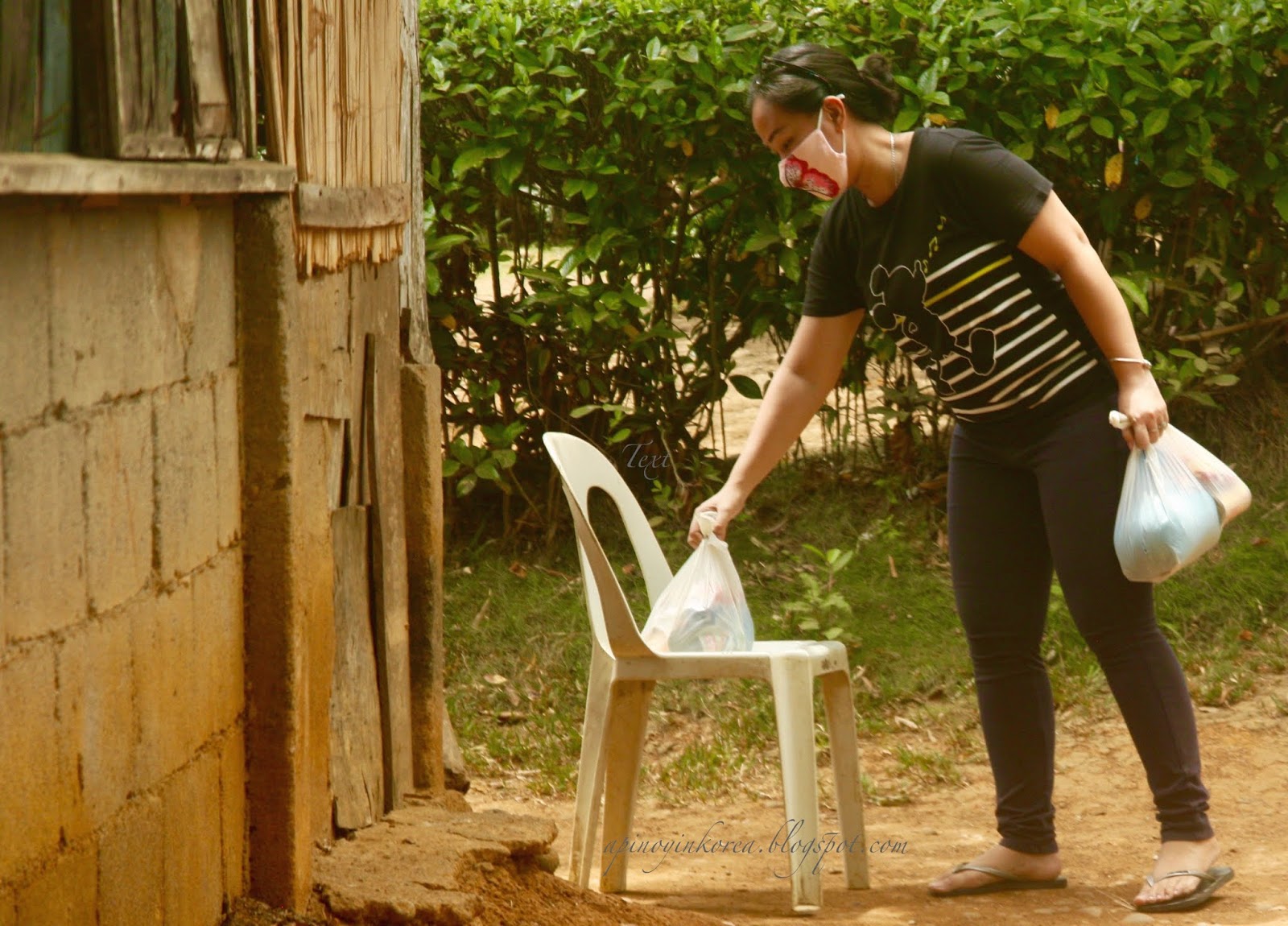
As I trailed Rev. Fr. Vince Camarines and the parish  volunteers during the distribution, I photographed the activities of sharing and caring, and deliberately left out faces because genuine charity should be faceless and nameless, except for a few photos where a smile brought joy to the team.😍


Because in this age of social media, some exploit the misfortunes of the poor for politics, selfish propaganda, and 'Likes'. 😩 

They share without flair.👍


The donations shared with these families, whose livelihood and sources of income have been affected by lockdowns, quarantines, restrictions and the absence of public transport, are a testament to our belief that it is our duty to look after one another. After all, we are all God's children.👪


Just as the Parish held the procession (video below) during the feast of Our Lady of Victory (Nuestra Señora de Las Victorias) on April 26, 2020, we continue to pray for the Virgin's intercession. 🙏 


(The procession of Nuestra Señora de Las Victorias)


The distribution of food packs was made possible through the generosity of the parishioners who simply responded to the online call for help posted at the Parish's official Facebook page as the Parish did not send out solicitation letters for this program. Kind souls read the post and answered with their heart.💗


As of end of May 2020, the Parish had distributed 2,320 food packs.👼 

The Parish continues to accept donations, and no gift is too small to make a difference.💝

Please click: The official Facebook page of the Our Lady of Victory Parish


And to all the parishioners who shared, gave, and donated in kind, in cash and their precious time, madamô guid nga salamat sa inyo bulig.😇

Here are the photographs in a video.😊


* * * * *
From the goodness of the donors, the simple gifts of rice and other food were received with both hands and by grateful hearts. 🙏


PS. I brought my camera to the rural areas, to the haciendas lying at the outskirts of the city.

And I came home, not just with pictures, but with so much more.😎